KUMAMOTO, Japan – A powerful earthquake struck southern Japan on Tuesday afternoon, causing buildings to collapse, roads to crack and fires to break out. Rescue crews were searching for people trapped inside damaged buildings as officials worked to confirm the number of dead, injured and missing.
The earthquake hit Kumamoto Prefecture on the island of Kyushu at about 4:27 p.m. local time. The Japan Meteorological Agency measured it at magnitude 7.1 and placed its depth at only 10 kilometers, or about 6 miles. The U.S. Geological Survey later lowered its magnitude estimate to 6.8.
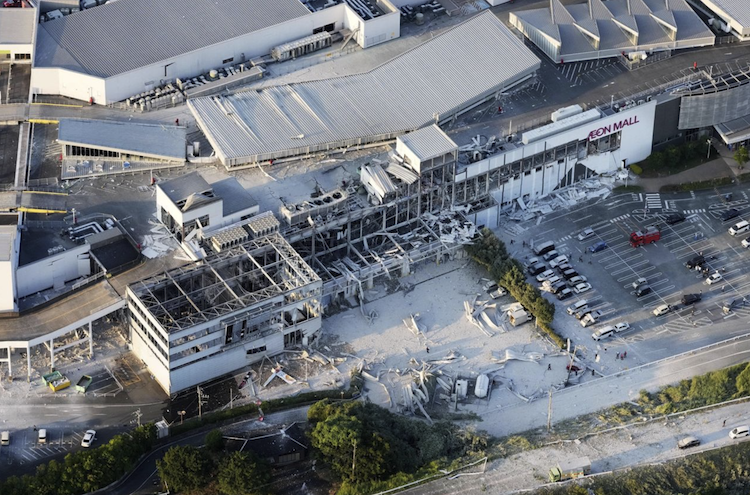
One of the worst scenes was at the Aeon Mall in Kashima. Part of the shopping center’s second floor collapsed after an apparent explosion, trapping an unknown number of people. Japanese media reported that many people were feared dead, while other reports said 20 to 30 people were unaccounted for. Police said an exact death count had not yet been confirmed.
Aeon officials said customers and workers were evacuated after the first shaking. The cause of the later explosion remained unclear. Television video showed one side of the large mall torn open, with steel beams and debris visible as firefighters and rescue teams searched the building.
Several people were also reported missing after a large chimney collapsed at a Nippon Paper Industries factory in Yatsushiro. At least 90 people were injured across the region, including about 10 who were seriously hurt, according to the latest reports. Hospitals continued receiving patients as emergency crews reached damaged areas.
A depth of 10 kilometers is considered very shallow for an earthquake. The U.S. Geological Survey classifies earthquakes less than 70 kilometers deep as shallow. Shallow earthquakes often cause stronger shaking near the surface because their energy has less distance to travel before reaching buildings, roads and people. However, the amount of damage also depends on the strength of the quake, local soil, distance from the fault and the quality of buildings.
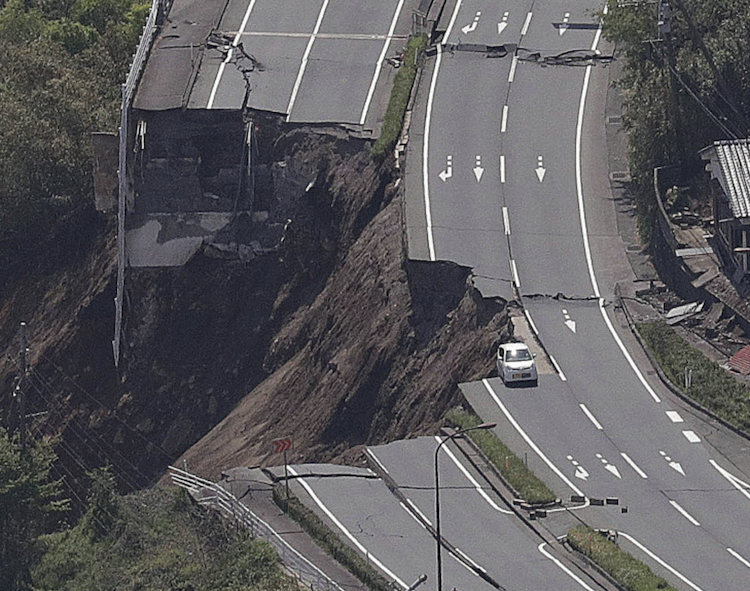
The earthquake caused widespread damage across Kumamoto. A freight train derailed, parts of major roads and bridges were damaged, and sections of the stone walls at Kumamoto Castle collapsed. Bullet-train and local rail service were stopped, while Kumamoto Airport closed its runway and diverted flights. About 48,000 homes lost electricity. The High Speed trains operated by Japan Railways have not reported any damage or injuries, and a spokesperson said all trains in the southern half of Japan automatically activated their emergency brakes once earthquake seismic activity was initially detected, specifically the initial P wave which travels faster and rarely causes damage, compared to the main earthquake which travels slower and brings with it the destructive shaking.
Authorities initially issued a tsunami advisory for coastal areas near Kumamoto, but it was lifted within about two hours after no tsunami was detected. Japan’s nuclear regulator said no problems were found at three nuclear power plants in the region.
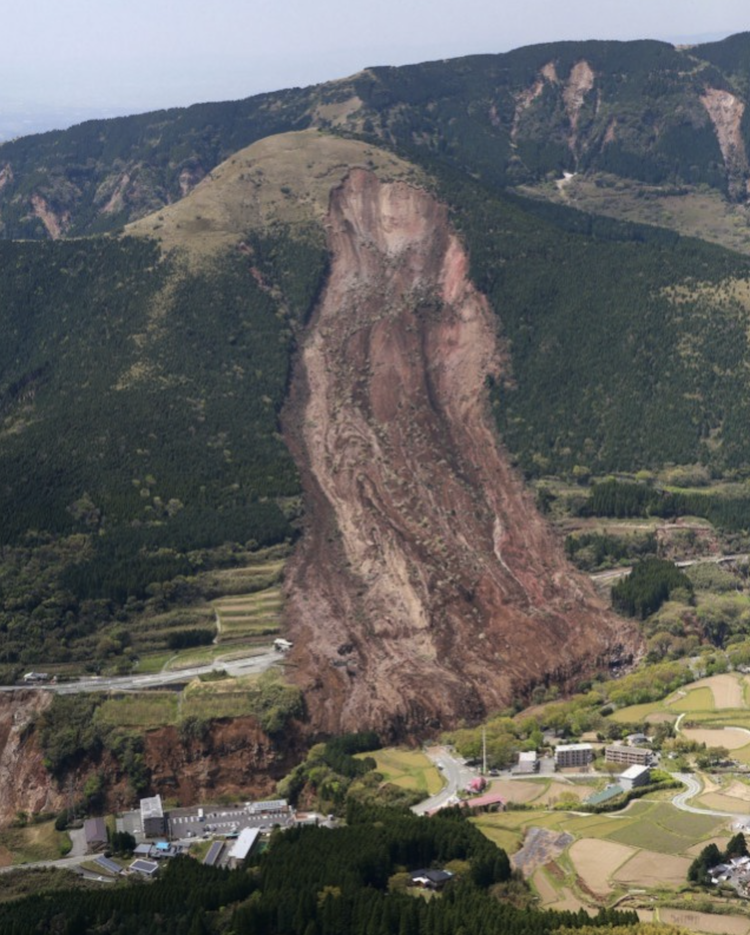
Prime Minister Sanae Takaichi created an emergency task force and sent thousands of military personnel to help with rescue work. Officials warned residents to prepare for strong aftershocks, damaged buildings and possible landslides during the coming days. The government said casualty and damage reports were still changing as search teams continued working through the night.