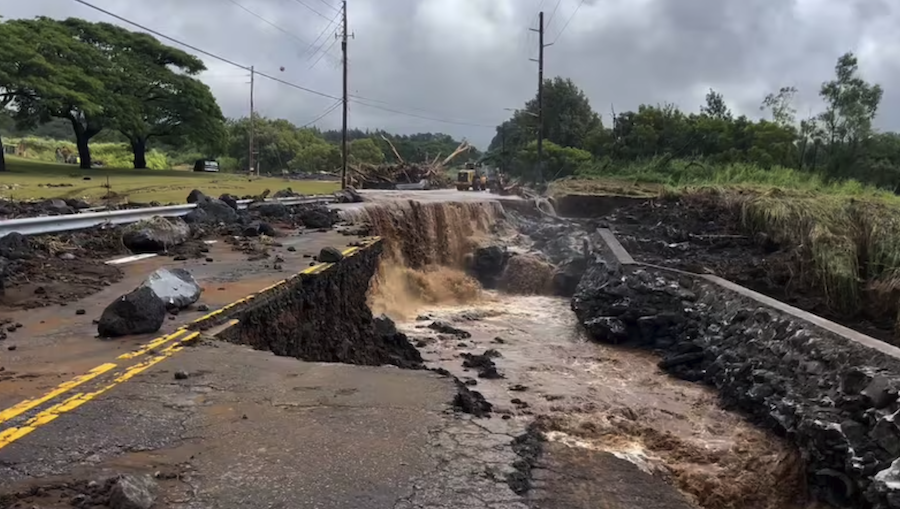
More than 100 homes were damaged, bridges were washed out and over 100,000 customers remained without power Monday.
HONOLULU — Hawaii began a major cleanup Monday after Hurricane Lala brought extreme rain, powerful winds and serious flooding across the islands. Lala reached Category 1 hurricane strength as it approached Hawaii over the weekend but weakened to a tropical storm without making a direct landfall. By Monday morning, the storm had moved well west of the state. All tropical storm warnings and flood watches had been canceled.
The Big Island suffered some of the worst damage. Officials said about 100 homes were damaged, destroyed or swept from their foundations by floodwater. At least six bridges in the southern Kaʻū District were damaged or destroyed, and sections of roads were washed away. The town of Pāhala was temporarily cut off, making it difficult to reach the community hospital there. Hawaii County Mayor Kimo Alameda described the damage in parts of the district as devastating.
Rainfall reached extraordinary levels. The National Weather Service recorded 43.54 inches of rain at Laupāhoehoe on the Big Island. Wind gusts reached 140 mph at the summit of Mauna Kea, although winds at lower elevations were generally much weaker. Tropical storm-force winds knocked down trees, damaged roofs and brought down power lines across several islands.
Power outages remained one of the largest problems Monday. Hawaiian Electric reported about 117,300 customers without electricity at 7 a.m. Hawaii time. Crews had already restored power to nearly 55,000 customers overnight, but the company warned that repairs in some remote areas could take much longer because roads, power lines and other equipment were badly damaged. Helicopters and drones were being used to inspect areas that could not easily be reached by road.
There has not been a confirmed death directly caused by Lala as of Monday afternoon. One person died Saturday in a head-on vehicle crash in the South Point area of the Big Island, but Gov. Josh Green said officials had not determined whether the crash was caused by the storm. Three people were also seriously injured when a tree fell on them in Puna and were taken to Hilo Medical Center. Officials have not released a statewide total for storm-related injuries.
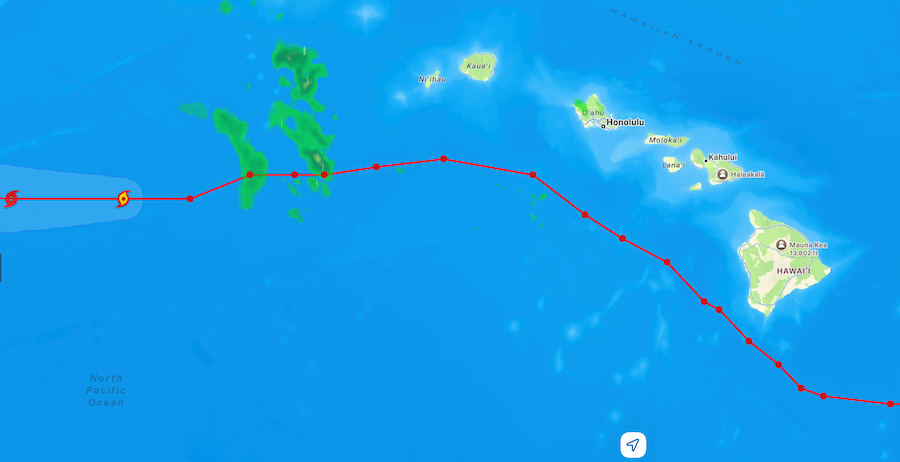
Hurricane Lala’s track and current location as of Monday Aug 17, 2026 at 4:56pm Central Time.
Emergency crews handled hundreds of calls during the storm. The Honolulu Fire Department received more than 600 weather-related reports by midday Sunday, including 147 calls involving fallen trees. Firefighters also responded to damaged roofs, downed power lines and flooding. At least one swimmer needed to be rescued. State and county offices and public schools were closed Monday so emergency crews could continue cleanup and repair work.
The final cost of the disaster is not yet known. Gov. Green has estimated that damage could reach hundreds of millions of dollars as officials inspect homes, bridges, roads, electrical systems and other public property. AccuWeather issued a much larger preliminary estimate of $3 billion to $5 billion in total damage and economic losses. That estimate includes not only damaged property but also power outages, lost business and tourism activity, so it should not be viewed as the final repair bill.
Lala was moving west away from Hawaii Monday. At 11 a.m. Hawaii time, the National Hurricane Center said the storm had maximum sustained winds near 60 mph and was moving west at about 10 mph. Forecasters said Lala could strengthen again after moving farther away from the islands. Although the main wind and flood threat has ended, dangerous surf and rip currents remain possible.
Hawaii emergency officials are also warning residents about dangers that remain after the storm. Floodwater may contain sewage, chemicals and other pollution, leading the state to issue Brown Water Advisories. Downed electrical lines, unstable trees, damaged roads and landslides can also remain dangerous after the weather improves. Officials are asking people to stay away from badly damaged areas while crews continue searching, repairing roads and restoring power.