The Federal Aviation Administration is moving ahead with one of the largest technology upgrades in U.S. aviation history, a plan intended to replace aging air traffic control equipment, reduce delays caused by system failures and give controllers more reliable tools to manage the busiest and most complex airspace system in the world. The FAA calls the effort the Brand New Air Traffic Control System, or BNATCS, and says it intends to deliver a new state-of-the-art system by the end of 2028.
The FAA’s plan focuses on five major areas: communications, surveillance, automation, facilities and Alaska-specific aviation infrastructure. In plain language, that means replacing old telecommunications connections, radios, radar systems, controller software, tower equipment and weather-reporting tools. The agency says the new system will replace outdated infrastructure including radar, software, hardware and telecommunications networks that are still used to manage modern air travel.
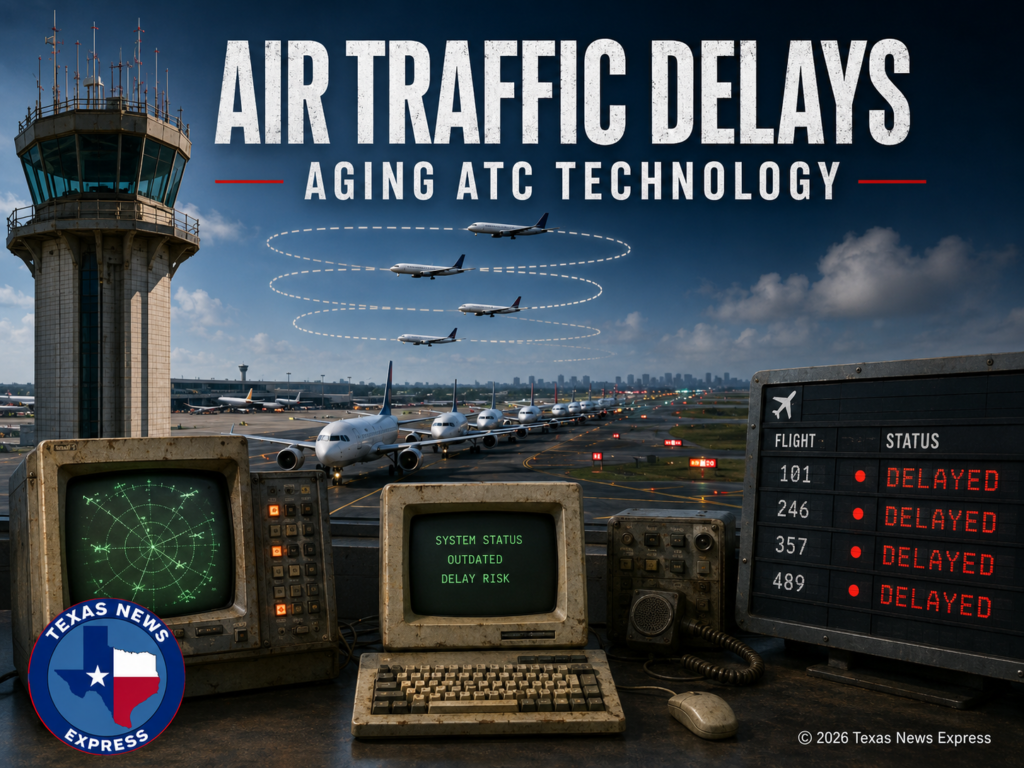
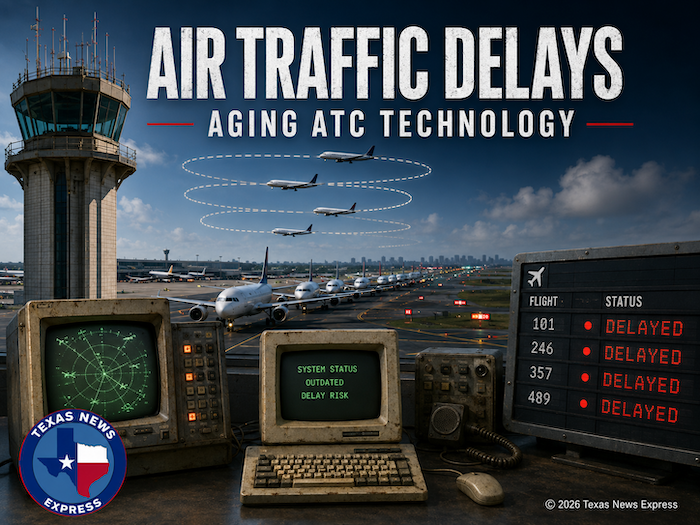
The above image was created with AI input for illustrative purpose.
The numbers are large. FAA’s current plan calls for more than 5,000 high-speed network connections, about 27,000 new radios, hundreds of digital voice switches, 612 state-of-the-art radars, surface-tracking upgrades at airports, electronic flight-data tools in towers, new information displays at hundreds of facilities, and additional weather stations and weather cameras in Alaska. The FAA also plans one new consolidated Air Route Traffic Control Center and one new consolidated Terminal Radar Approach Control facility.
The reason for the urgency is that the current system is safe but increasingly fragile. FAA says that when equipment failures occur, the agency often maintains safety by slowing flights, which can increase delays. According to the FAA, flight-delay minutes caused by equipment issues in 2025 were about 300 percent higher than the average from 2010 through 2024. That is the core argument for modernization: not that the system is unsafe today, but that aging technology makes it harder to keep the system safe, efficient and resilient without slowing traffic.
The FAA’s older NextGen modernization program laid much of the foundation for today’s upgrade. In its 2025 final report, the FAA described NextGen as a multibillion-dollar effort to modernize the National Airspace System through better communications, navigation, surveillance, automation, weather tools and information management. The FAA said NextGen helped improve standards, safety and security, but the next phase is now focused more directly on replacing aging core infrastructure.
Progress has started, but the project is far from finished. The Department of Transportation said in April that the FAA had already replaced nearly 50 percent of old copper wires, converted about 270 radio sites, installed new surface-awareness systems at 54 airports, and moved 17 towers to electronic flight strips. Reuters reported the same figures after a DOT event in Washington.
The FAA is also reorganizing itself around the modernization effort. In January, the agency announced a new structure that includes a dedicated Airspace Modernization Office, required by the FAA Reauthorization Act of 2024, to handle National Airspace System planning, research and development, systems engineering and portfolio management. FAA officials said the broader agency strategy is built around three pillars: people, safety and NAS modernization.
The project is expensive and still not fully funded. Congress approved an initial $12.5 billion investment, which FAA describes as a down payment. The agency says additional money will be needed to complete the full BNATCS program and has identified a need for about $20 billion more. FAA says it has brought in a single integrator to manage the overhaul, with contract incentives for good performance and penalties for missed deadlines or performance problems.
For passengers, the clearest potential benefit is fewer equipment-related delays. Newer communications systems, digital voice switches, electronic flight strips, improved surface tracking and more reliable radar should help controllers move aircraft more predictably, especially during busy periods or equipment disruptions. The FAA says the new systems are intended to reduce equipment-related delays throughout the National Airspace System.
For aviation safety, the benefit is more complicated but important. Modern equipment does not eliminate the need for trained controllers, pilots and strict procedures. But better surveillance of aircraft and airport surface movement can help controllers track aircraft and vehicles on runways, taxiways and ramps. FAA says the plan includes replacing aging radars, providing clearer tracking of aircraft and vehicles at FAA-owned airports, and installing surface-movement radar at the most complex airports.
The upgrade could also create temporary strain. Large technology transitions can bring training challenges, installation disruptions, software integration problems and schedule delays. The Government Accountability Office has repeatedly warned that FAA modernization has a mixed record. GAO said FAA met some NextGen milestones but missed others, sometimes by several years, and found that some especially concerning air traffic control systems had replacement dates at least six to ten years away as of May 2024.
GAO’s findings are a reminder that modernization is not just about buying new hardware. The FAA has to manage risk, train staff, keep old and new systems operating during the transition, and avoid disrupting a live air traffic network that handles more than 45,000 flights daily. GAO has said FAA still needs stronger risk mitigation and better transparency for unsustainable and critical systems.
The plan may also affect passengers indirectly through airline schedules. FAA officials have said future tools, including customized software and predictive analytics, could help improve traffic-flow planning and reduce aircraft waiting on the ground. Those ideas are still developing and depend on funding, testing and safe integration. FedScoop reported that FAA leaders are exploring digital twins, predictive analytics and customized AI-related tools, but those efforts go beyond the initial $12.5 billion funding package and are not yet a completed operating system.
The bottom line is that the FAA’s modernization push is both necessary and risky. It is necessary because the current system depends on too much aging infrastructure and because equipment-related delays are rising. It is risky because the FAA has a long history of modernization delays, and replacing core systems while keeping the skies operating is technically difficult. If the agency succeeds, passengers could see fewer delays, controllers could get better tools, and the aviation system could become more resilient. If the project slips or is underfunded, the country may remain stuck with a safe but increasingly strained air traffic system that has to slow down more often just to keep operating safely.