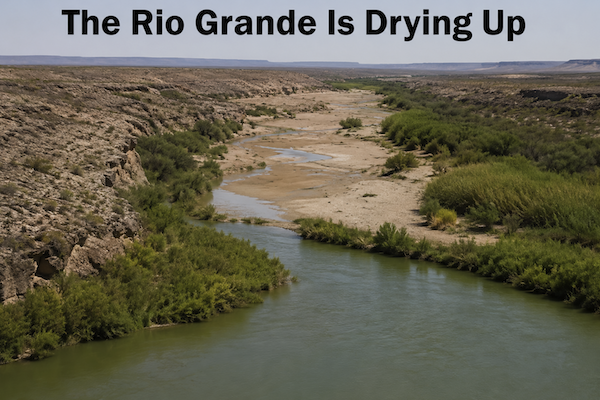
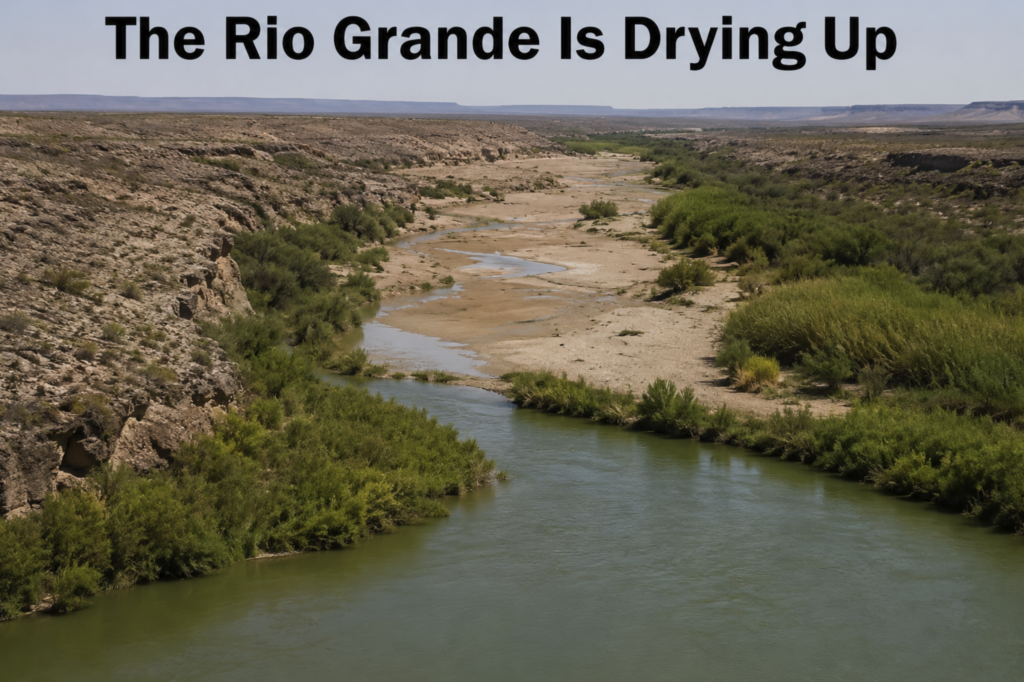
The Rio Grande, one of North America’s most important rivers and the natural border between Texas and Mexico, is once again showing signs of severe stress, with some stretches running dry and many others reduced to historically low flows.
From New Mexico to South Texas, communities that rely on the river are facing a familiar but worsening problem: there is not enough water moving through the system to meet the demands of cities, farms, wildlife and international water agreements.
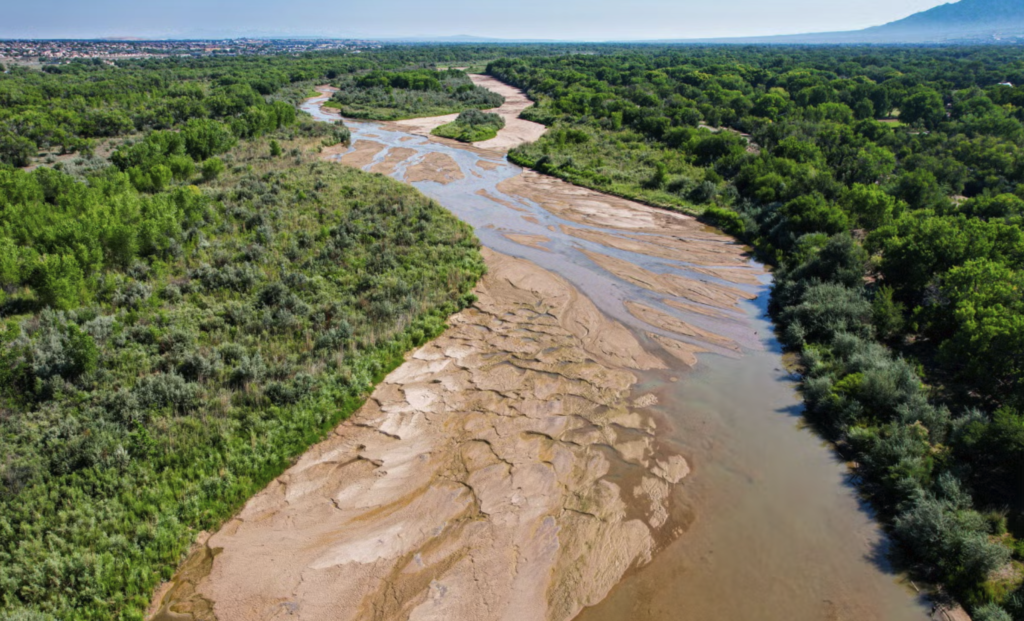
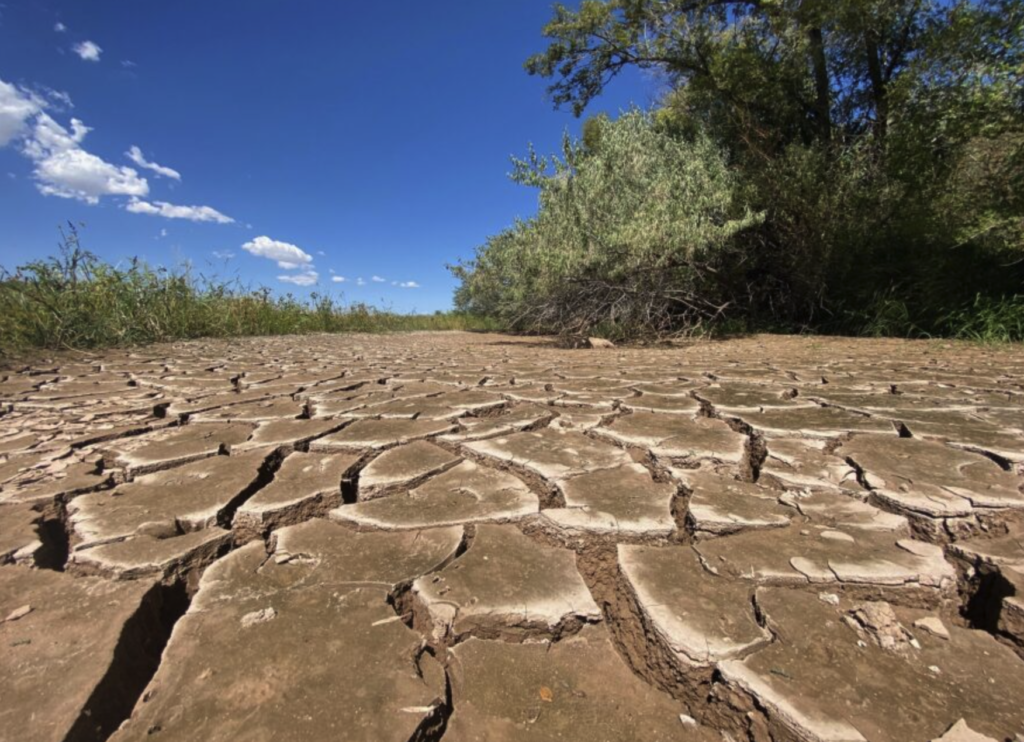
In parts of New Mexico, especially along the Middle Rio Grande, the river has dried in recent years in places where residents once expected flowing water through much of the year. In other areas, the river remains visible but shallow, narrow and slow-moving. Farther downstream in Texas, the river is not entirely dry, but the reservoirs that support cities and agriculture in the Rio Grande Valley remain dangerously low.
Falcon Reservoir, one of the two major international reservoirs that support the Lower Rio Grande Valley, was only about 24.6% full as of July 9. Amistad Reservoir, the other major storage lake on the system, also remains well below normal. Together, the reservoirs provide a critical water supply for border cities, irrigation districts and farms.
The problem is not isolated to one city, one state or one country. The Rio Grande begins in the mountains of Colorado, flows through New Mexico, reaches El Paso, then continues as the border river between Texas and Mexico before emptying into the Gulf of Mexico. Along the way, nearly every part of the system is under pressure.

Why the River Is So Low
Water experts point to several causes: drought, low mountain snowpack, long-term overuse, hotter temperatures, irrigation demand, reservoir losses and complicated water-sharing agreements between states and nations.
The Rio Grande depends heavily on snowmelt from the mountains of Colorado and northern New Mexico. When winter snowpack is low, less water flows into the river during spring and summer. This year, officials with the Rio Grande Compact Commission warned that 2026 river flows could be among the lowest in history.
Hotter weather also worsens the problem. Higher temperatures cause more evaporation from reservoirs, canals and soil. They also increase water demand from crops, lawns, livestock and natural vegetation along the river. In desert regions, extreme heat can turn a bad water year into a crisis.
The river is also heavily used. Farmers, cities, industries and irrigation districts all draw from the system. A recent basin-wide analysis found that water use in the Rio Grande-Bravo basin is exceeding what nature can reliably replace. The study concluded that only about 48% of the water consumed in the basin is naturally replenished, meaning the remaining use depends on drawing down reservoirs, aquifers or the river itself.
Agriculture remains the largest direct user of Rio Grande water. Crops in New Mexico, Texas and northern Mexico depend on irrigation, and farmers often have few alternatives when surface water deliveries are reduced. Some turn to groundwater, but that creates another problem: aquifers can be depleted faster than they recharge.
Impact on Farmers and Ranchers
Farmers along the Rio Grande are among the first to feel the impact when river levels fall.
Shorter irrigation seasons mean fewer crops, lower yields and more financial pressure. Some farmers are forced to leave fields unplanted, reduce acreage, switch crops or pump more groundwater. In some areas, irrigation canals have dried earlier than normal, even though the growing season typically continues for months.
The effects can reach beyond the farms themselves. Less farming means fewer jobs for workers, less business for equipment suppliers, lower income for rural communities and higher pressure on food prices. In South Texas, citrus, vegetables, sugarcane, cotton and other crops have all depended historically on Rio Grande water.
The water crisis has already changed parts of the agricultural economy. Studies have found major farmland losses across parts of the Rio Grande basin since 2000, including in New Mexico and Texas tributary regions.
Cities Along the River Face Growing Pressure
For cities and towns along the river, low water levels raise serious concerns about drinking water, growth and long-term planning.
The Rio Grande Valley is especially vulnerable because the river supplies most of the region’s water. Unlike some large Texas metro areas that rely on multiple reservoirs, aquifers or imported water systems, many Valley communities are tied closely to the Rio Grande and the Amistad-Falcon reservoir system.
When reservoir storage drops, cities may impose watering restrictions, delay development plans or search for expensive alternative supplies. Water utilities may also face higher treatment costs when low flows concentrate sediment, pollutants or salts.
Border communities face added uncertainty because the river is managed through a combination of local, state, federal and international systems. The United States and Mexico share water under treaty obligations, while Colorado, New Mexico and Texas are governed by the Rio Grande Compact for the upper portion of the river.
Those agreements were created during a different era, before today’s population growth, hotter climate conditions and increased groundwater pumping.
Environmental Damage Along the Rio Grande
The shrinking river is also harming wildlife and ecosystems.
The Rio Grande supports wetlands, cottonwood forests, fish, migratory birds and other wildlife that depend on periodic flows. When the river dries or becomes a series of isolated pools, fish and aquatic species can die. Birds and animals lose habitat, and invasive vegetation can take over areas where native plants once thrived.
In New Mexico, the bosque—the wooded river corridor along the Rio Grande—is both an ecological and cultural landmark. But it requires water to survive. When flows decline, trees become stressed, wildfire danger increases and the natural river habitat becomes more fragile.
Environmental advocates say the river cannot be protected by focusing only on cities and farms. They argue that the river itself must be treated as a water user, with enough flow left to sustain wildlife, wetlands and the communities built around the river.
South Texas and the Mexico Water Dispute
In South Texas, the water shortage is also tied to long-running concerns over Mexico’s deliveries under the 1944 water treaty.
The treaty requires Mexico to deliver water to the United States from certain tributaries that feed the Rio Grande. Texas officials and farmers have repeatedly argued that Mexico has fallen behind on those deliveries during dry years, leaving South Texas communities and irrigation districts short.
Mexico has also faced drought in northern states, and Mexican farmers and cities are under pressure from the same shrinking water supply. That has made the issue politically difficult on both sides of the border.
However, experts caution that Mexico’s delayed deliveries are only part of the larger crisis. Even with full treaty compliance, the Rio Grande basin would still face long-term challenges from overuse, drought, heat and population growth.
Communities Adapting to a Smaller River
Local communities are trying to adapt in different ways.
Some cities are expanding water conservation programs, encouraging residents to reduce lawn watering, repair leaks and use drought-tolerant landscaping. Irrigation districts are working to modernize canals, reduce seepage and improve delivery systems. Farmers are experimenting with different crops, improved irrigation technology and temporary fallowing programs.
In New Mexico and Colorado, officials are discussing or implementing programs that pay farmers to use less water or leave some land unplanted during dry years. Groundwater regulation is also becoming more important as river shortages push more users toward wells.
But these solutions are expensive and politically difficult. Reducing water use usually means someone receives less water than they expected, whether that is a farmer, a city, a developer or an ecosystem.
A Warning for the Future
The Rio Grande has always been a river of extremes. It has seen floods, droughts, political conflict and environmental change for centuries. But the current crisis is different because the system is being stressed from many directions at once.
There is less snowmelt in many years. Temperatures are hotter. Reservoirs are low. Farms and cities continue to need water. Groundwater is being pumped to make up for missing river flows. International and interstate agreements are under strain.
For communities along the river, the question is no longer whether the Rio Grande can run dry in places. It already has.
The larger question is whether Texas, New Mexico, Colorado, Mexico and federal water managers can reduce demand enough to keep the river functioning for the people, farms and ecosystems that depend on it.
Without major changes, experts warn that dry riverbeds, shorter irrigation seasons and water restrictions may become more common—not as temporary emergencies, but as the new reality along the Rio Grande.