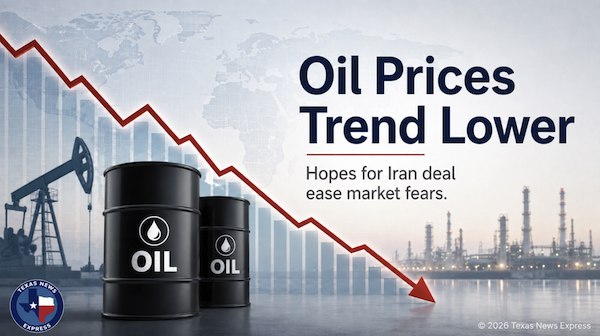
Oil prices fell sharply Wednesday after President Donald Trump said U.S. negotiations with Iran were in their “final stages,” raising hopes that a deal could ease the Middle East conflict and reopen more energy shipments through the Strait of Hormuz.
Brent crude futures fell $4.76, or 4.28%, to $106.52 a barrel by late Wednesday morning, while U.S. West Texas Intermediate crude dropped $4.22, or 4.05%, to $99.93, according to Reuters. Both benchmarks were on track for their largest daily declines in two weeks.
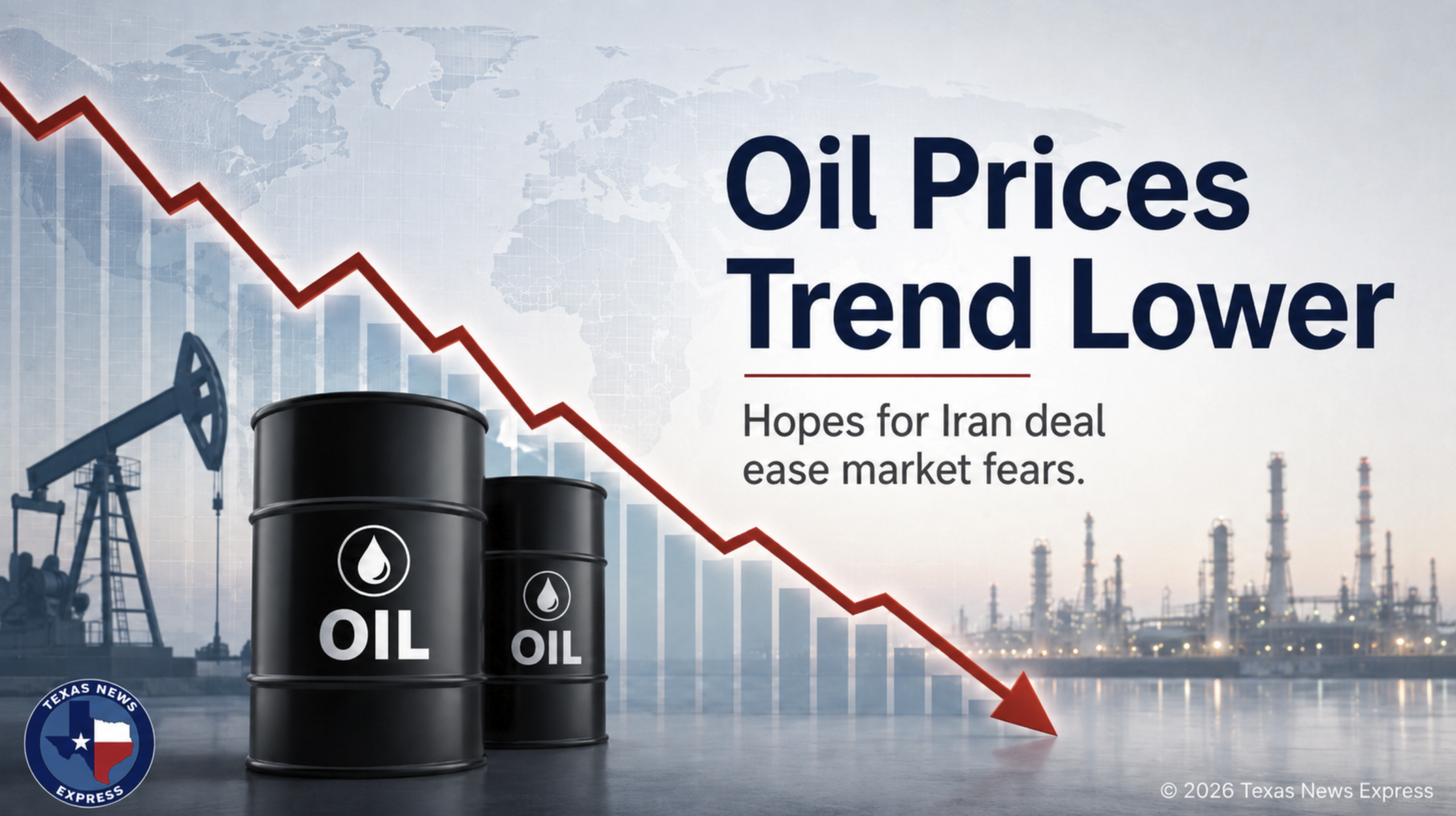
The drop reflected a shift in market sentiment. Traders who had been pricing in the risk of a prolonged disruption to Middle East oil shipments responded to signs that Washington and Tehran may be moving closer to an agreement. Trump told reporters that talks with Iran were near the end stage, but also warned that the United States could take further action if no deal is reached.
The market reaction shows how sensitive oil prices remain to developments in the conflict. Just two days earlier, prices had also slipped after Vice President JD Vance said the two countries had made “a lot of progress” in talks and that neither side wanted renewed military action.
Supporters of a possible deal argue that even limited diplomatic progress could reduce pressure on global fuel markets. Any agreement that allows more tankers to safely pass through the Strait of Hormuz would likely help stabilize crude supplies, lower shipping risk and ease some of the inflation pressure that high energy prices place on consumers and businesses.
But analysts and energy traders warned that the price drop does not mean the supply crisis is over. Reuters reported that only a small number of supertankers were crossing the Strait of Hormuz on Wednesday, while the number of vessels moving through the waterway remained far below prewar levels.
The Strait of Hormuz is one of the world’s most important energy chokepoints. The U.S. Energy Information Administration says oil flows through the strait averaged about 20 million barrels per day in 2024, equal to roughly 20% of global petroleum liquids consumption. The EIA also notes that most oil volumes moving through Hormuz have few practical alternative routes if the strait is closed or heavily restricted.
That is why some analysts remain cautious. Citi analysts said Brent crude could rise to $120 a barrel in the near term if supply risks remain underpriced, while Wood Mackenzie estimated prices could approach $200 if the Strait of Hormuz stays largely shut through the end of the year, according to Reuters.
Iran’s position also remains a major obstacle. Earlier this month, Reuters reported that Tehran’s proposal called for an end to hostilities, the lifting of sanctions, compensation for war damages, an end to the U.S. naval blockade and guarantees against further attacks. Trump rejected that earlier response as “totally unacceptable.”
For Texas, the price swing carries added significance. The state is home to the Permian Basin, one of the world’s most productive oil fields, and the Gulf Coast refining and export system plays a central role in U.S. fuel supply. Lower crude prices can help consumers at the pump, but volatility can also complicate planning for producers, refiners, airlines, trucking companies and petrochemical plants.
The next major question for markets is whether Wednesday’s optimism turns into an actual agreement. If a deal reopens shipping routes and reduces the threat of military escalation, crude prices could continue to ease. If talks collapse or shipping through Hormuz remains restricted, analysts say the same market that sold off Wednesday could quickly reverse direction.
For now, oil traders appear to be betting on diplomacy — but not with full confidence.