T-Mobile built much of its modern brand around being the wireless company that made things simpler for customers. It called itself the “Un-carrier,” challenged contracts, talked up customer service, and moved faster than AT&T and Verizon in rolling out broad 5G coverage.
Now, some customers and employees are asking whether that same company is quietly becoming more like the carriers it once criticized.
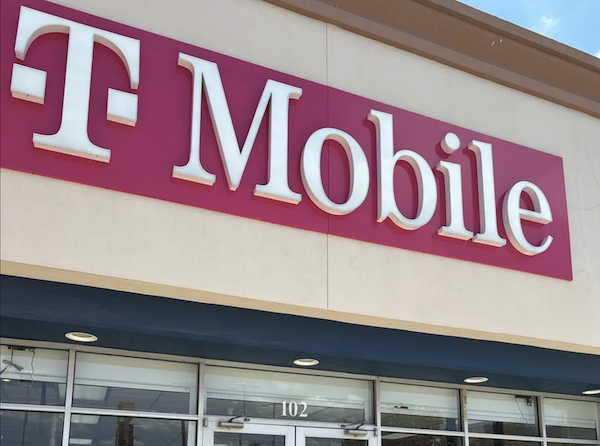
PhoneArena reported this week that T-Mobile has begun closing some company-owned retail locations, known in the industry as COR stores. The report, citing employees and customer discussion online, says some stores being closed are not necessarily low-performing locations, raising concern that the company may be shrinking its physical retail footprint as part of a broader shift toward app-based service and lower operating costs. T-Mobile has not publicly released a full national list of closures, so the exact scale remains unclear.
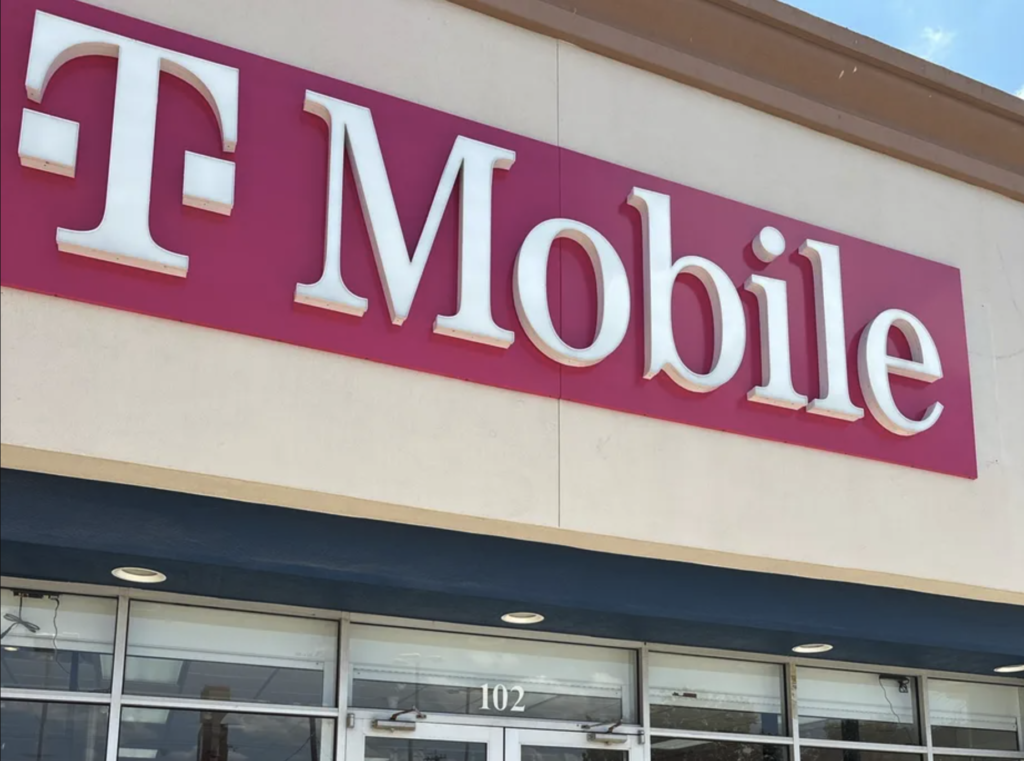
For customers, the issue is not just whether one store closes. It is whether wireless companies are making it harder to get in-person help at the same time phone plans, device financing, trade-ins, billing credits and upgrades have become more complicated.
T-Mobile has already been moving more customer activity into its T-Life app. The Sun reported that, beginning Aug. 1, T-Mobile plans to require many upgrades and line additions to be handled through the app, with new-customer transactions expected to follow later. The report described the move as part of a digitalization and cost-cutting strategy, though T-Mobile has said support would still be available for customers who cannot use the app.
That may be efficient for T-Mobile. Whether it is good for customers depends on the customer.
For tech-savvy users who know exactly what they want, digital-first service can be faster. It can mean fewer store visits, less waiting, and possibly cleaner self-service tools. But for older customers, people with disabilities, customers with broken phones, small-business users, or families trying to sort out trade-in credits and billing problems, closing stores can remove the one place where a real person can look at the account and help solve the problem.
That is where the consumer concern comes in. Wireless companies often advertise simplicity, but many of their best deals depend on fine print: eligible plans, device condition, trade-in windows, monthly bill credits, autopay rules and multi-year financing. If a customer misunderstands one step, the cost can be hundreds of dollars.
How T-Mobile compares with AT&T and Verizon
T-Mobile is not alone in pushing customers toward apps and online account management. AT&T and Verizon also encourage customers to use digital tools for billing, plan changes, device upgrades and support. The whole industry has moved in that direction because apps are cheaper than staffed retail counters.
The difference is branding and customer expectation. AT&T and Verizon have long been viewed as more traditional telecom giants. T-Mobile sold itself as the more customer-friendly disruptor. If T-Mobile closes stores and forces more transactions into an app, customers may feel the change more sharply because it cuts against the company’s old image.
On network strategy, the comparison is more complicated.
T-Mobile was early and aggressive in deploying nationwide 5G, especially after gaining Sprint’s valuable 2.5 GHz spectrum. That gave T-Mobile a strong mid-band advantage. Mid-band 5G is often considered the “sweet spot” because it can deliver much faster speeds than low-band 5G while still covering much larger areas than millimeter wave. T-Mobile’s own materials describe Ultra Capacity 5G as using mid-band and/or mmWave, and the company has promoted broad Ultra Capacity coverage for years.
Independent testing has repeatedly found that T-Mobile customers experience some of the fastest average 5G speeds in the United States. Opensignal’s January 2026 report said T-Mobile users continued to experience the fastest 5G connections among national carriers.
But there is an important distinction. The fastest kind of 5G technology is generally high-band millimeter wave, or mmWave. It can deliver extremely high speeds, but it has limited range and works best in dense areas, stadiums, airports, downtown districts and other high-traffic locations. AT&T says its 5G+ includes both mid-band coverage and high-band service for high-traffic areas, venues and airports. Verizon’s Ultra Wideband network also includes high-performance 5G service, with C-band expansion helping bring faster 5G to more people beyond the limited reach of mmWave.
That means the simple claim that “AT&T and Verizon have the faster 5G” is not always true. In many real-world national speed tests, T-Mobile has led because its mid-band network is widely available. But in specific places where mmWave is deployed and working well, mmWave can be faster than mid-band 5G. The tradeoff is coverage: blazing speed in a small area versus strong speed over a much larger area.
Is T-Mobile closing stores to fund faster 5G?
It is possible that reducing retail costs could free up money for network investment. But there is no verified public evidence showing that T-Mobile is closing stores specifically to fund a major mmWave catch-up plan.
A more cautious reading is this: T-Mobile appears to be trying to reduce retail costs and move more customer activity into digital channels, while continuing to invest heavily in wireless and home broadband growth. T-Mobile said it ended 2025 with 142.4 million total customers and 8.5 million 5G broadband customers, and it has set larger broadband growth targets for 2030.
T-Mobile may eventually use savings from retail changes for network upgrades, debt reduction, shareholder returns, app development, customer acquisition or other corporate priorities. Unless the company says otherwise, it would be speculation to claim the store closures are directly meant to fund mmWave deployment.
Is this good for the customer?
For some customers, yes. For others, no.
It could be good for customers if T-Mobile uses digital tools to make upgrades simpler, reduce fees, speed up support, improve billing transparency and keep plan prices competitive. A well-designed app can make routine account management easier.
But it is bad for customers if store closures leave people without practical help, especially when dealing with billing disputes, device problems, trade-in credits, accessibility needs or fraud concerns. A cheaper customer-service model is not automatically a better one.
The consumer test is simple: Will customers save money or get better service, or will T-Mobile simply save money while customers do more of the work themselves?
Right now, the answer is mixed.
T-Mobile still has a strong network story, especially on broad mid-band 5G coverage and average 5G speed. But if the company keeps closing stores and pushing transactions into apps, it risks losing part of what made customers trust it in the first place.
For customers, the best advice is to document everything. Before upgrading, trading in a phone or changing plans, take screenshots of offers, save confirmation emails, photograph trade-in devices, write down store or support interactions, and check the first two or three bills after any change. If stores are going away, the paper trail becomes even more important.