
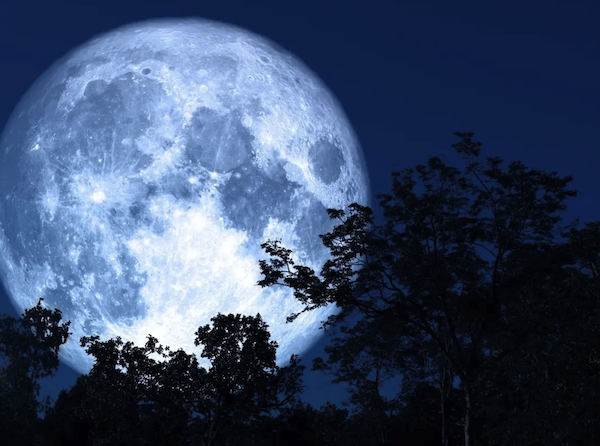
Every now and then, the calendar looks up at the sky and realizes it has made room for one extra moonbeam.
That is what happens on Sunday, May 31, 2026, when May’s second full moon reaches peak illumination at 3:45 a.m. Central Time. Because it is the second full moon in a single calendar month, it earns the familiar nickname: Blue Moon.
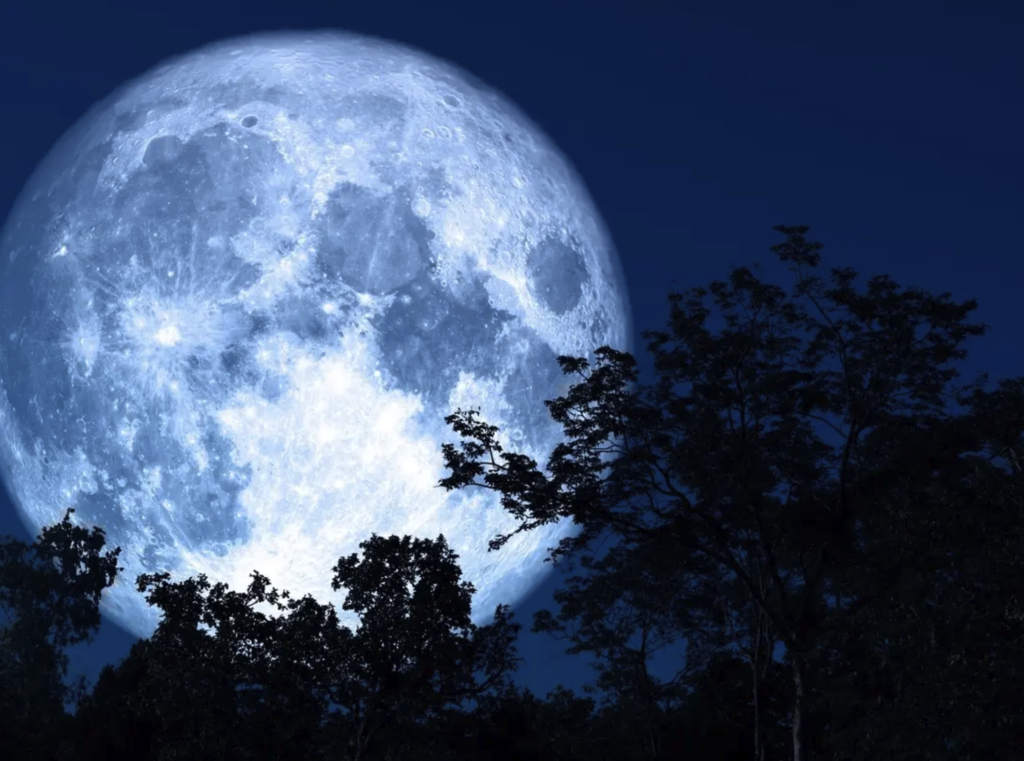
The phrase “once in a blue moon” has long been used to describe something rare, unusual or delightfully unexpected. This weekend’s moon fits the saying — with one important clarification: it almost certainly will not look blue.
NASA explains that a blue moon is usually blue in name only. The modern monthly definition applies when two full moons occur in the same month, which happens because the moon’s cycle is about 29.5 days, slightly shorter than most calendar months.
May 2026 opened with a full moon on May 1, commonly called the Flower Moon, and closes with another on May 31. That second lunar curtain call is the Blue Moon.
There is another bit of lunar whimsy attached to this one. Timeanddate reports that the May 31 full moon will be about 406,135 kilometers, or 252,361 miles, from Earth, making it a Micro Full Moon. In practical backyard terms, that means it may appear about 6% to 7% smaller than an average full moon, though most people will not notice much difference with the naked eye.
EarthSky describes it as the smallest full moon of 2026, part of a string of distant full moons known as micromoons.
So, will it be blue? Probably not. NASA says the moon can appear bluish only under unusual atmospheric conditions, such as smoke or dust particles that scatter red light. EarthSky notes that people reported genuinely blue-looking moons after major volcanic eruptions, including Krakatoa in 1883 and Mount St. Helens in 1980. But for most viewers this weekend, the moon will be its usual silvery, golden or pale white self — wearing a blue name tag for calendar reasons.
There are two common definitions of a Blue Moon. The older seasonal definition refers to the third full moon in a season that has four full moons. The more widely used modern definition is the second full moon in a calendar month. NASA recognizes both uses, while noting that the monthly version has been common since the 1940s.
The next seasonal Blue Moon is expected on May 20, 2027, according to Timeanddate and EarthSky.
For skywatchers, no telescope is required. A clear view of the eastern horizon after moonrise on the night of May 30 into May 31 should be enough to enjoy the show. The moon will appear full for a day or so before and after its exact peak, giving casual observers more than one chance to step outside, look up and enjoy a small calendar oddity floating quietly over the world.
It may not be blue. It may not be enormous. But it is still the kind of thing worth pausing for — the sky’s gentle reminder that even timekeeping has room for surprise.
After all, chances like this come only once in a Blue Moon.