SpaceX is moving closer to entering the U.S. mobile phone market as a full wireless carrier, putting its Starlink Mobile business on a possible path to compete directly with AT&T, Verizon and T-Mobile. The company has agreed to acquire nationwide 800 MHz wireless spectrum and says it plans to combine satellites with a ground-based cellular network, a major change from Starlink’s current role of mainly filling coverage gaps where normal cell towers cannot reach.
The move does not mean Americans can sign up for a full Starlink phone plan today. SpaceX has not announced consumer pricing or a firm launch date for a nationwide service. The company also still needs Federal Communications Commission approval for its latest spectrum purchase.
However, SpaceX is now openly saying that it wants Starlink Mobile to become what it calls a “major mobile carrier in the US.”
That would put the company into a business that has long been dominated by traditional wireless networks.
SpaceX announced Oct. 8 that it had reached an agreement to buy Grain Management’s nationwide portfolio of 800 MHz spectrum licenses. The portfolio includes as much as 14 megahertz of paired spectrum depending on location and covers nearly the entire U.S. population.
Financial terms were not officially disclosed, although The Wall Street Journal reported that the deal is worth about $8 billion.
Wireless spectrum is the portion of radio frequencies that mobile companies use to connect phones with their networks. Different frequencies have different strengths.
The 800 MHz spectrum SpaceX is buying is considered valuable because lower-frequency signals can travel relatively long distances and pass through walls, trees and other obstacles better than many higher-frequency signals.
That could help solve one of the largest weaknesses facing satellite phone service.
A satellite may provide coverage across a huge area, but connecting reliably to a phone inside a house, office building or vehicle can be much more difficult. SpaceX says the new spectrum would give Starlink Mobile a stronger ground-based coverage layer for those situations.
Most modern smartphones already support the 800 MHz band involved in the deal, according to SpaceX and Reuters. That means the company’s plans would not necessarily require customers to purchase a traditional satellite phone.
SpaceX’s plan is also different from simply putting more satellites into orbit.
The company has told federal regulators that it intends to install radios and antennas on towers, rooftops and other structures. Those ground systems would work with the Starlink satellite network.
In effect, SpaceX is working toward a hybrid phone network. A user’s phone could connect through ground equipment where it is available and use satellites to extend service into places without normal cellular coverage.
That would mark a major expansion from what Starlink currently provides to mobile phone users in the United States.
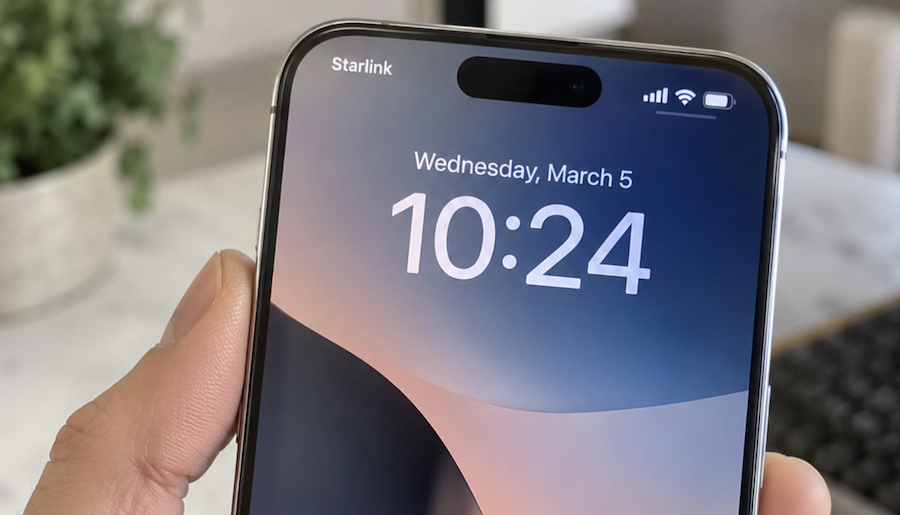
SpaceX already works with T-Mobile on direct-to-cell satellite service. Starlink satellites can connect compatible phones when users are outside the reach of normal cell towers.
That service has been designed mainly to fill dead zones rather than replace T-Mobile’s existing cellular network.
SpaceX President Gwynne Shotwell made the company’s larger ambitions clear during an earnings call in August.
Shotwell said the company intends to build terrestrial, or ground-based, infrastructure and turn Starlink into a “true mobile service.”
She also said SpaceX expects to take “quite a few” customers from the established wireless companies.
SpaceX has been spending heavily to gain the radio spectrum needed to make that possible.
The company previously acquired 65 megahertz of wireless spectrum licenses from EchoStar through deals valued at a combined $19.6 billion, according to Reuters. Some of that spectrum can be used for terrestrial service as well as communications from space.
The FCC has also approved a major expansion of SpaceX’s next-generation satellite system.
SpaceX has authority for a Starlink Gen2 constellation totaling 15,000 satellites, and the company is developing a separate next-generation mobile system designed to provide much greater direct-to-phone capacity. SpaceX says its future Starlink Mobile satellites could provide more than 100 times the bandwidth of the current generation. FCC Docs
SpaceX says the combination of its 2 GHz mobile spectrum and the newly proposed 800 MHz spectrum could eventually allow it to provide service both inside buildings and far outside traditional cellular coverage.
The company’s plans have attracted attention on Wall Street.
Shares of AT&T, Verizon and T-Mobile dropped sharply after SpaceX announced the latest spectrum deal. The reaction reflected concern among investors that the U.S. wireless market could eventually gain a large new competitor. Axios
The existing carriers are pushing back on the idea that buying spectrum automatically creates a competitive national phone network.
Verizon spokesman Rich Young said that spectrum has little value without the infrastructure needed to use it.
“This company can have tons of spectrum available,” Young told Reuters, adding that without a network, it is “just empty airwaves.”
T-Mobile Chief Technology Officer John Saw has taken a less confrontational position.
Saw said T-Mobile would welcome SpaceX if the company becomes another U.S. wireless provider. He said competition can encourage innovation and benefit consumers.
At the same time, he cautioned that acquiring spectrum represents only one part of building a nationwide cellular network.
That point is shared by several telecommunications analysts.
The largest U.S. wireless carriers have spent decades building towers, installing equipment and buying spectrum. They also operate large customer service systems and retail networks.
Craig Moffett of MoffettNathanson said in August that it would be extremely difficult for Starlink to become competitive in the next several years without access to another carrier’s network through an agreement known as an MVNO arrangement.
An MVNO, or mobile virtual network operator, sells its own phone service while using another company’s physical cellular network.
SpaceX has not announced such an agreement.
T-Mobile CEO Srini Gopalan has previously said his company is not interested in providing SpaceX with an MVNO arrangement, even though T-Mobile continues to work with SpaceX on satellite coverage. Fierce Network
Other analysts believe SpaceX could find different ways around the infrastructure problem.
The company could build its own network gradually, buy additional wireless assets or install smaller cellular base stations instead of relying entirely on traditional large towers.
SpaceX CEO Elon Musk has said the company expects to use many smaller cellular stations around the country. Existing Starlink equipment at homes and businesses could also play a role in connecting parts of the network.
Some analysts remain skeptical about the cost.
The established wireless companies control much larger amounts of spectrum and already have extensive nationwide infrastructure.
New Street Research analyst David Barden told Reuters that it would not make sense for SpaceX to simply try to copy what traditional carriers spent decades building.
Others see the company’s satellite network as an advantage that traditional carriers cannot easily duplicate.
SpaceX already launches its own satellites and operates a large global broadband network. Supporters of the company’s strategy argue that combining those satellites with terrestrial service could reduce the amount of traditional infrastructure SpaceX needs to build.
FCC Chairman Brendan Carr responded positively to the latest spectrum deal, saying additional investment and competition could create more options for consumers and support new communications technologies.
There are also concerns about how much wireless spectrum one company should control.
The Rural Wireless Association has opposed some recent large spectrum transfers involving SpaceX and other major companies. The group has argued that increasing spectrum concentration can make it harder for smaller rural carriers to compete. Ars Technica
At the same time, smaller carriers could potentially benefit from satellite networks that allow them to reach customers in places where building towers would be too expensive.
The existing national carriers are also expanding their own satellite strategies.
AT&T, T-Mobile and Verizon formally launched a joint venture on Oct. 1 aimed at expanding direct-to-device satellite coverage across the United States. The companies say the system is intended to reduce dead zones while allowing several satellite providers to compete for business. AT&T Newsroom
Their existing satellite agreements will remain in place. AT&T and Verizon have worked with AST SpaceMobile, while T-Mobile has an existing relationship with SpaceX.
That creates an unusual situation in which SpaceX and T-Mobile are currently partners in satellite service while SpaceX is preparing to become a possible competitor for T-Mobile’s regular wireless customers.
SpaceX’s next-generation plans could also change what consumers expect from satellite phone service.
Today, satellite-to-phone connections are generally most useful when a person leaves normal cellular coverage. A future Starlink Mobile network is intended to provide a more continuous service that moves between ground equipment and satellites without requiring a separate satellite phone.
SpaceX has not yet released details about monthly plans, phone financing or whether customers would be able to transfer their existing numbers directly to Starlink.
The company has also not announced how quickly it would build ground infrastructure across major U.S. cities.
The latest spectrum acquisition remains subject to FCC approval. SpaceX has indicated in regulatory filings that next-generation direct-to-device service could begin around late 2027, with additional satellites and network capacity being added afterward. Ars Technica