
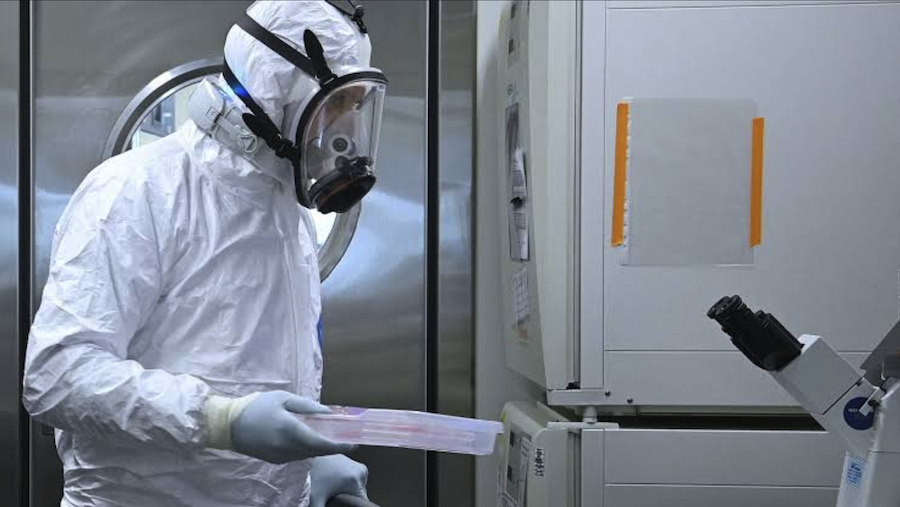
IRKUTSK, Russia – The death of a laboratory worker in Siberia has raised concerns about a possible case of pneumonic plague, leading Russian health officials to place people under medical observation and take emergency precautions in the region.
Russian authorities have not confirmed that the woman died from plague. Officials say she died from pneumonia of an unknown cause, while reports about a possible laboratory accident remain under investigation.
The woman, identified by Reuters as 28-year-old Darya Shipilova, worked at the Irkutsk Anti-Plague Research Institute of Siberia and the Far East. The institute studies dangerous infectious diseases, including plague.
Shipilova became seriously ill in late September and was hospitalized in Shelekhov, a city in Russia’s Irkutsk region. She later died after developing severe pneumonia.
Her death led to increased health precautions across the area. Nearly 200 people who may have had direct or indirect contact with Shipilova were reportedly placed under medical observation. Some hospital areas were quarantined, while authorities carried out testing and other measures designed to prevent a possible spread of disease.
So far, Russian officials say no additional cases connected to Shipilova have been detected.
Questions surrounding the case grew after Russian media and other news organizations reported claims that Shipilova may have been exposed to plague bacteria while working at the institute.
Some reports said a test tube containing the bacterium that causes plague may have broken inside the laboratory. Those claims have not been confirmed.
Russia’s federal health agency, Rospotrebnadzor, said investigators found no evidence that Shipilova’s illness was connected to dangerous microorganisms used in her work. The agency also said there had been no reported accident involving dangerous pathogens at the institute.
Russian officials have described the situation in the Irkutsk region as stable and have urged residents not to rely on rumors spreading online.
The conflicting reports have made it difficult to determine exactly what happened before Shipilova became sick.
The United States is also monitoring the situation. A State Department spokesperson said U.S. officials are aware of reports involving a suspected case of pneumonic plague and are working with the Centers for Disease Control and Prevention and other federal agencies.
The State Department also encouraged Russian authorities to release accurate information about the case quickly.
European officials are watching developments as well. The European Commission said it is closely monitoring the suspected case and is prepared to coordinate with European Union countries if the situation changes.
There is currently no confirmed evidence that the illness has spread outside the immediate area or that the incident represents a large plague outbreak.
Plague is caused by a bacterium called Yersinia pestis. The bacteria normally circulate among small mammals and fleas in several parts of the world.
The disease is most commonly associated with bubonic plague, which causes painful swelling of lymph nodes.
Pneumonic plague occurs when the infection reaches the lungs. Unlike the more common bubonic form, pneumonic plague can spread from one person to another through infected respiratory droplets during close contact.
Without treatment, pneumonic plague can become deadly very quickly. Modern antibiotics, however, can successfully treat the disease when it is identified early and treatment begins promptly.
Plague has not disappeared. Naturally occurring cases continue to appear in parts of the world where the bacteria live among wild animal populations.
The disease is also known to occur naturally in parts of Siberia.
The situation has attracted international attention partly because Shipilova worked at an institute specifically designed to study dangerous diseases.
That has also led to comparisons online with laboratory safety concerns raised during the COVID-19 pandemic. Health experts say those comparisons should be treated cautiously.
Plague is caused by bacteria rather than a virus and is already well understood by doctors and scientists. Effective antibiotics are available to treat the disease.
For now, the most important unanswered question is what caused Shipilova’s illness.
Russian health officials maintain that testing has not established a connection between her death and the plague bacteria studied at her workplace. Outside governments are continuing to monitor the case while seeking additional information.
As of Monday, October 5, there were no confirmed reports of additional plague cases linked to the incident, and Russian authorities had not officially declared a plague outbreak.