A fragile ceasefire between the United States and Iran came under renewed pressure Wednesday after Iranian missile and drone attacks targeted Kuwait and Bahrain, prompting U.S. forces and regional air defenses to intercept incoming threats and the U.S. military to carry out what it described as self-defense strikes on Iran’s Qeshm Island.
U.S. Central Command said American forces “successfully defeated” multiple Iranian ballistic missiles and drones during the attacks. According to CENTCOM, two Iranian missiles fired toward Kuwait fell short or broke apart before reaching their targets, while three missiles launched toward Bahrain were intercepted by U.S. and Bahraini air defense forces. CENTCOM also said U.S. forces shot down three one-way attack drones launched toward civilian mariners transiting regional waters.
No U.S. personnel were harmed, according to CENTCOM.
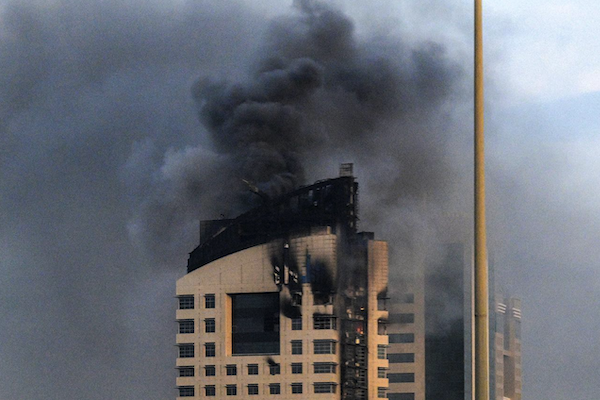
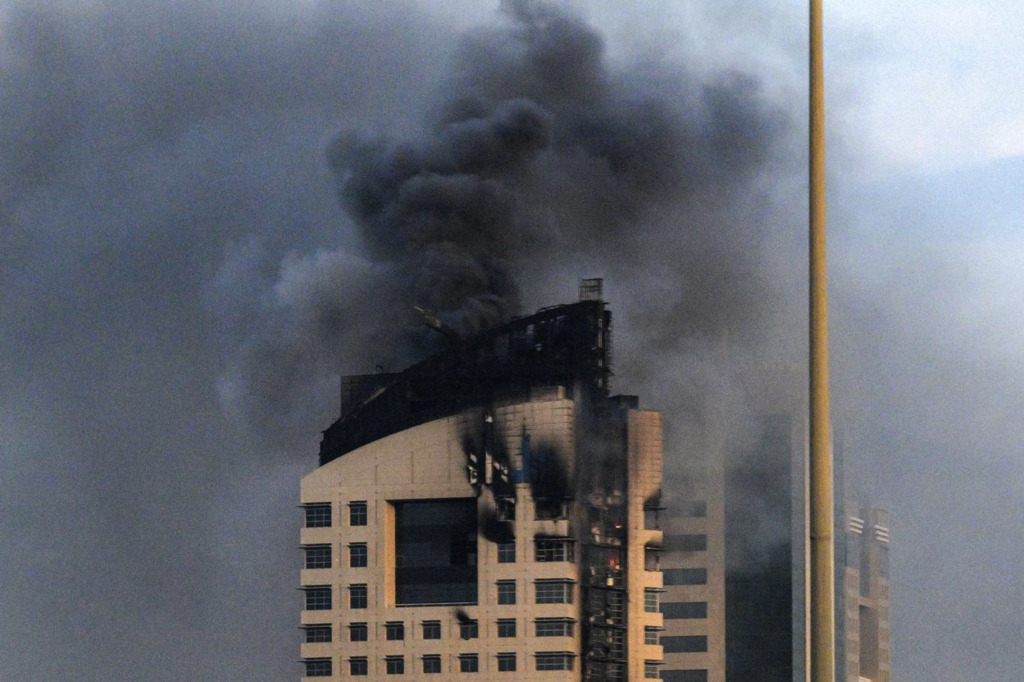
The most serious confirmed damage occurred in Kuwait, where an Iranian attack struck civilian facilities, including Kuwait International Airport. Kuwaiti officials said one person was killed and more than 60 others were injured. The attack caused severe damage to Terminal 1, forced authorities to divert flights, and temporarily disrupted airport operations. Kuwait Airways and Jazeera Airways later resumed some service after safety reviews.
Iran’s Islamic Revolutionary Guard Corps claimed it attacked the headquarters of the U.S. Fifth Fleet in Bahrain, an airbase, and helicopters in the region. U.S. Central Command denied that U.S. bases were hit and said the Iranian attacks failed to strike their intended military targets.
In response to the attempted attacks, CENTCOM said U.S. forces conducted strikes on an Iranian military ground-control station on Qeshm Island, near the Strait of Hormuz. The island sits in a strategically important area near one of the world’s most critical maritime chokepoints.
Iranian officials and state-linked media framed the attacks as retaliation for earlier U.S. actions, including U.S. operations involving Iranian-linked vessels and sites near the Strait of Hormuz. Iranian Foreign Minister Abbas Araqchi said Iran’s armed forces were acting in self-defense and warned that any hostile act would bring an immediate response.
The latest exchange adds pressure to an already strained ceasefire that followed months of conflict involving the United States, Israel, Iran, and Iran-aligned groups across the region. The ceasefire has reduced some fighting but has not ended periodic military flare-ups, especially around the Gulf, Lebanon, and the Strait of Hormuz.
The Strait of Hormuz remains central to the crisis. Before the war, the waterway carried a major share of global oil and liquefied natural gas shipments. Reuters reported that oil prices rose nearly 2% Wednesday as the strait remained largely closed and traders reacted to the new attacks and uncertainty over diplomacy.
Diplomatic efforts remain uncertain. President Donald Trump has said talks with Iran are continuing, while Iranian-linked reporting has suggested communication through intermediaries has slowed or paused. Tehran has tied progress to broader regional demands, including fighting in Lebanon, sanctions relief, access to oil revenue, and limits on U.S. operations around Iranian ports.
The situation also drew concern from Gulf countries. Qatar condemned attacks on civilian targets in Kuwait and Bahrain, calling them violations of sovereignty and international humanitarian law. A senior United Arab Emirates adviser said repeated attacks on Gulf states required a unified regional response.
For now, U.S. officials say American forces remain prepared to defend U.S. personnel, allies, and civilian shipping. Iran, meanwhile, has warned that continued U.S. military actions could bring more missile and drone attacks.
The immediate question is whether Wednesday’s exchange remains a contained military flare-up or becomes another step toward a wider regional conflict. With civilian infrastructure now hit in Kuwait, U.S. forces active near Hormuz, and peace talks uncertain, the ceasefire appears increasingly fragile.