
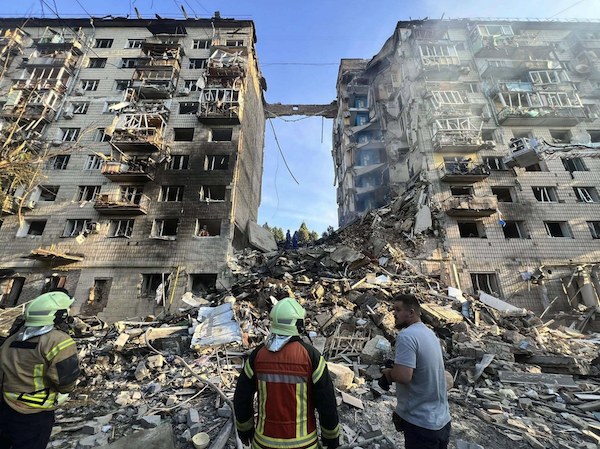
KYIV, Ukraine — Russia launched one of its heaviest aerial attacks on Kyiv since the start of its full-scale invasion, striking the Ukrainian capital and surrounding region with hundreds of drones and missiles, including what Ukrainian officials said was an Oreshnik hypersonic ballistic missile.
Ukrainian President Volodymyr Zelenskyy said Russia used the Oreshnik during the overnight attack into Sunday, marking what he described as the third use of the powerful missile in the four-year war. The Associated Press reported that at least two people were killed and 83 wounded in the attack, which damaged buildings near government offices, residential areas, schools and a market. Ukraine’s Air Force said Russia launched 600 strike drones and 90 missiles, while Ukrainian defenses destroyed or jammed 549 drones and 55 missiles.
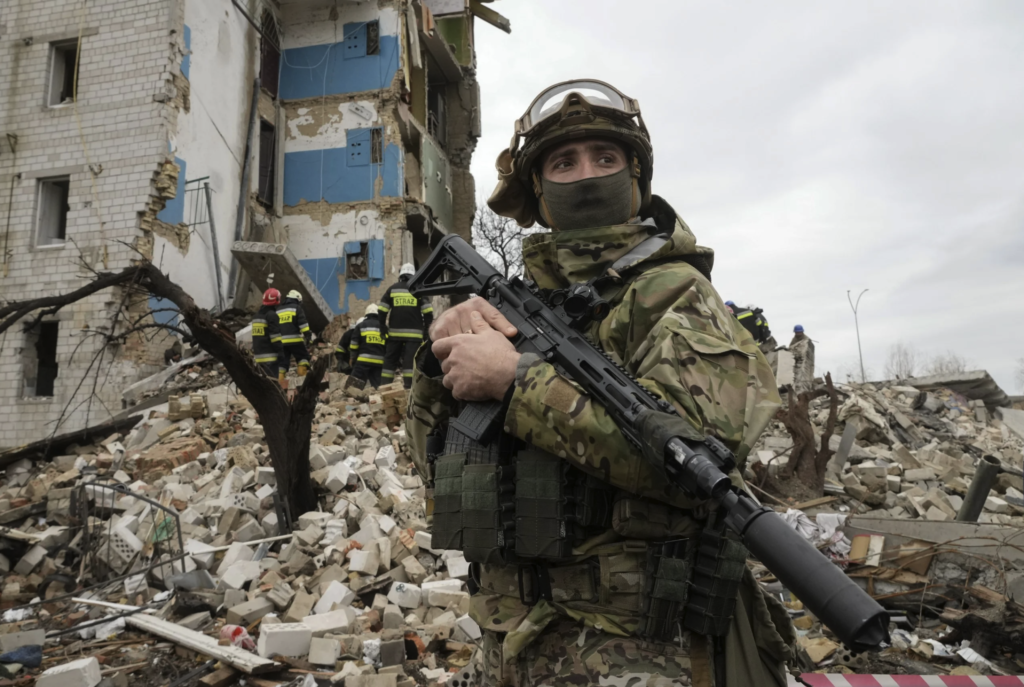
The AP photo report from Kyiv showed rescue workers evacuating residents, firefighters battling blazes, damaged residential buildings, injured civilians receiving aid and damage at the Museum of Chernobyl. The images reflected the scale of destruction across civilian areas of the capital after a night of air raid sirens and explosions.
Russia’s Defense Ministry confirmed it used the Oreshnik and other missiles, saying the strikes targeted Ukrainian military command facilities, air bases and military-industrial sites. Moscow said the attack was retaliation for what it described as Ukrainian strikes on civilian facilities in Russian-held territory. Ukrainian officials denied targeting civilians and said their recent operation in Russian-occupied Luhansk targeted Russia’s war machine.
The latest attack came amid a wider wave of missile, drone and artillery strikes across both Ukrainian and Russian-controlled territory. Reuters reported Monday that at least eight people were killed in the previous 24 hours in strikes across Russia and Ukraine. Those included deaths reported in Russian-controlled Horlivka, Russia’s Belgorod region, Ukraine’s Kherson region and near Kharkiv. Reuters noted it could not independently verify all battlefield and casualty claims, and both sides deny deliberately targeting civilians.
Ukraine says the attack highlighted a continuing weakness in its air defenses, especially against ballistic missiles. Zelenskyy said not all ballistic missiles were intercepted. AP reported that Kyiv remains heavily dependent on U.S.-supplied Patriot systems to defend against those threats, but interceptor missiles remain in short supply and are among Ukraine’s most urgent requests to Western partners.
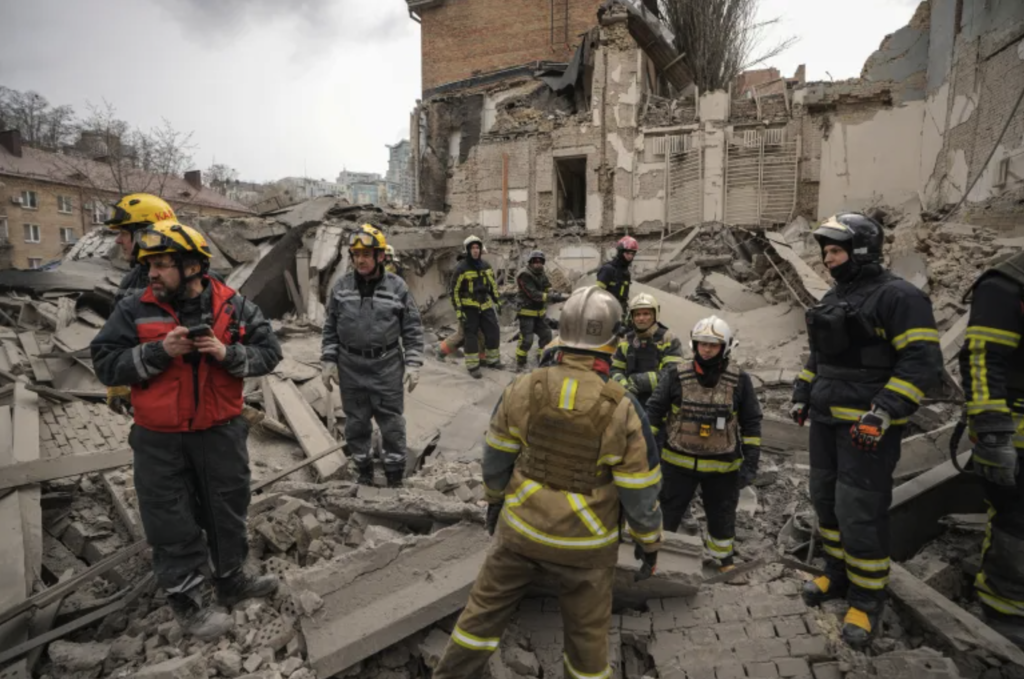
European leaders condemned the Russian attack and the reported use of the Oreshnik missile. AP reported that French President Emmanuel Macron, German Chancellor Friedrich Merz and European Union foreign policy chief Kaja Kallas criticized the strikes, with Kallas saying EU foreign ministers would discuss ways to increase pressure on Moscow.
The humanitarian toll of the war has been rising in recent months. The United Nations Human Rights Monitoring Mission in Ukraine said more civilians were killed and injured in Ukraine during the first four months of 2026 than during the same period in any of the previous three years. The mission said at least 238 civilians were killed and 1,404 injured in April, bringing verified civilian casualties in 2026 through April to 815 killed and 4,174 injured. It also said the high casualty rate continued into May, with at least 62 civilians killed and 376 injured in the first seven days of the month, while warning that actual figures are likely higher.
On the battlefield, the war remains locked in a costly struggle along a long front line. Russia has continued pressing in eastern Ukraine, while Ukraine has relied on air defenses, drones, long-range strikes and localized counterattacks to slow Russian advances. Reuters reported that U.S. mediation efforts have so far failed to end the war, and Ukraine is preparing reinforcements for northern regions because of concerns about a possible new Russian offensive.
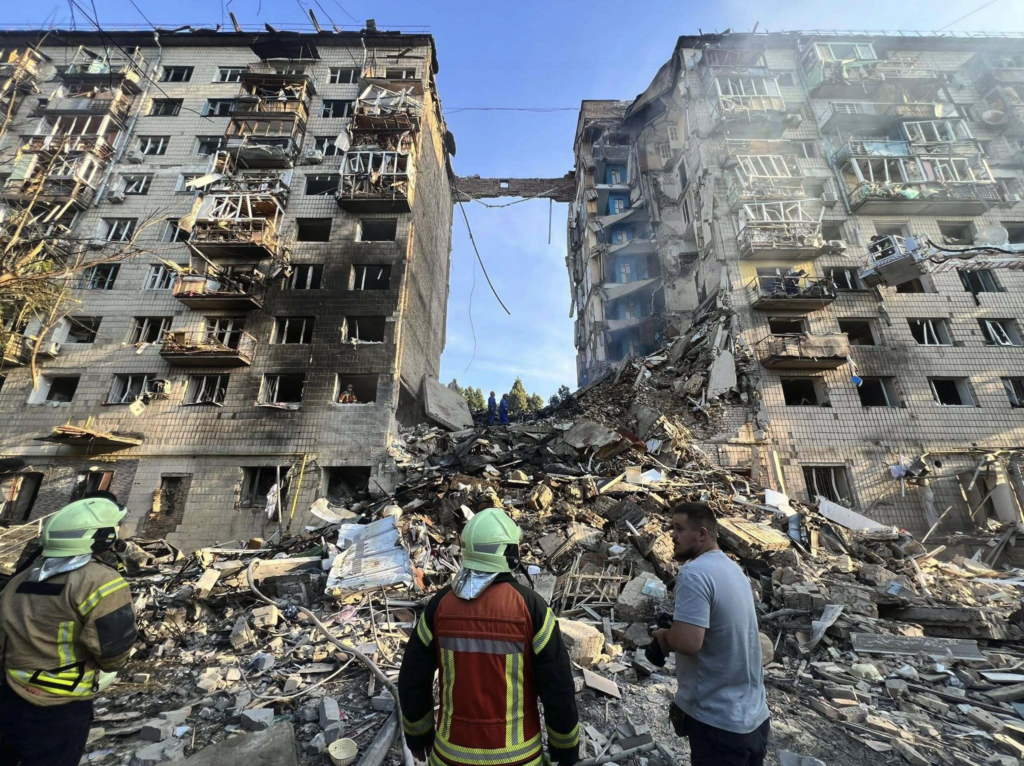
For civilians in Kyiv, the latest attack reinforced the reality that the capital remains vulnerable despite years of air defense improvements. Fires burned into the morning after the strikes, rescue crews searched damaged buildings, and residents described apartments, markets and workplaces destroyed.
The war, now in its fourth year since Russia’s full-scale invasion in February 2022, shows little sign of nearing a negotiated end. The latest Kyiv barrage has instead deepened calls from Ukraine and its allies for more air defense support, while Russia continues to frame its strikes as retaliation and part of its broader military campaign.