
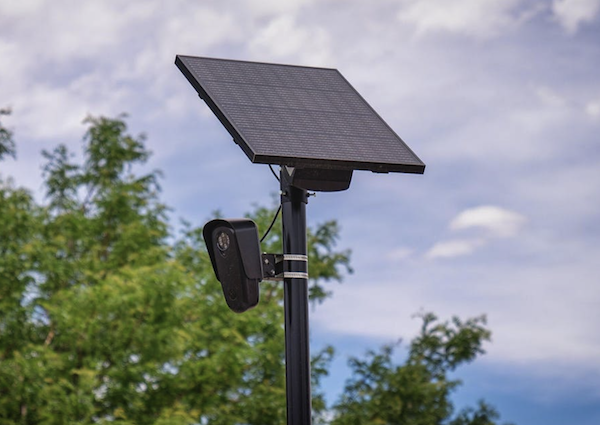
Flock Safety’s automatic license plate reader cameras are spreading across American cities, neighborhoods, school districts, shopping centers and police departments. Supporters call them a modern public safety tool. Critics call them a growing private surveillance network that collects information on ordinary Americans without their knowledge, consent or meaningful choice.
The controversy is no longer only about whether the cameras help police solve crimes. The larger question is whether a private company should be allowed to build a nationwide vehicle-tracking system by recording the movements of millions of people who never agreed to be monitored.
Flock Safety says its technology helps law enforcement find stolen cars, locate suspects, recover missing people and solve serious crimes. The company also says it does not sell license plate data and that the data belongs to its customers, such as police departments, cities, homeowners associations and businesses.
But privacy advocates argue that the business model still raises a major civil liberties problem: Flock profits from a system that collects location data from people who did not opt in, did not sign terms of service, and may not even know their vehicle movements are being recorded. Critics say that is different from a credit bureau, bank, phone app or insurance company, where consumers usually enter into some form of agreement, even if the terms are long, complicated or unavoidable in modern life.
With Flock cameras, the person being tracked is usually not the customer. The city, police department, HOA or business is the customer. The driver is the data point.
That distinction is at the center of the growing national debate.
A September 2025 YouGov survey found that 42 percent of U.S. adults opposed the use of license-plate reader data by Immigration and Customs Enforcement to track undocumented immigrants, including 32 percent who strongly opposed it. That poll did not ask the broader question of whether Americans believe it is right for a private company to gather vehicle location data without consent and profit from the system. But the ICE-related results show that a large share of Americans are uncomfortable with at least some uses of license plate reader data, especially when the data moves beyond local public safety into broader surveillance.
The Electronic Frontier Foundation recently added new evidence to the debate. In a May 2026 analysis of millions of Flock Safety search logs, EFF said it found law enforcement agencies using the system for school residency verification, employment background checks, noise complaints and other low-level matters far removed from the violent crimes and stolen vehicles often used to justify the technology.
According to EFF, Flock cameras record every vehicle that passes, including the license plate, make, model, color, distinguishing characteristics, time, date and location. When that information is stored and searched across thousands of cameras in many cities, it can reveal far more than a single trip down a public road.
It can show patterns.
It can suggest where a person lives, works, worships, receives medical treatment, spends the night, attends political events, visits family, goes on vacation or meets privately with others. Even if the company is not creating a formal “lifestyle profile” in the way a marketing company might, the data itself can allow police or other authorized users to infer deeply personal information about a person’s life.
That is why critics say the privacy threat is not the camera on one street corner. It is the network.
A single officer writing down one license plate on one road is limited by time, place and human capacity. A national network of automated cameras is different. It can preserve records, search across jurisdictions and reconstruct movement patterns after the fact. That power is what civil liberties groups say should require a warrant or, at minimum, strict documentation tied to a real investigation.
In an interview with Texas News Express, Houston resident Mike Rogers said he does not object to Flock cameras being used for legitimate law enforcement purposes, but he believes access should come with stronger safeguards.
“I don’t mind Flock,” Rogers said. “But cops should have to either get a warrant to access Flock data or at least provide a real case number and real information before being given results to a search.”
Rogers said his concern is that officers could misuse the system by entering weak, misleading or fake case information to conduct searches that would otherwise never be approved.
That concern is not theoretical. The Institute for Justice, a civil liberties law firm, reported in April 2026 that police have reportedly used license plate reader systems to stalk romantic interests at least 18 times in recent years. The examples identified by the group included officers accused of tracking estranged wives, ex-girlfriends, dating partners, coworkers and other people who were not legitimate targets of criminal investigations.
Some of the cases involved Flock systems specifically. In Kansas, a police chief resigned after allegedly using Flock cameras to track an ex-girlfriend and her new boyfriend more than 200 times. In another Kansas case, a police lieutenant pleaded guilty after using Flock cameras to track his estranged wife. In Wisconsin, an officer resigned after internal investigators found he used a department Flock system to monitor a coworker with whom he was romantically involved. In Florida, an officer was accused of using license plate reader technology to stalk his girlfriend and her family members more than 100 times.
Those cases are especially damaging for public trust because they highlight the central fear behind mass surveillance: once a powerful database exists, the public must trust every authorized user not to abuse it.
Flock and law enforcement agencies often point to audit trails and internal controls as safeguards. Those tools can help detect misuse after the fact. But critics argue that an audit trail does not protect privacy in real time if an improper search has already been performed. A person whose movements were searched unlawfully may never know it happened unless an audit, lawsuit, news investigation or internal complaint brings it to light.
The courts have not settled the issue nationally. Some judges have been skeptical of warrantless mass license plate surveillance, while others have found that drivers have limited privacy expectations on public roads. In Virginia, for example, a court battle over Norfolk’s Flock system drew national attention after a lower court ruled against warrantless use, but the Virginia Court of Appeals later sided with law enforcement under the facts of that case.
Meanwhile, cities and states are responding in different ways.
Mountain View, California, shut off its Flock cameras after police said federal agencies accessed local license plate data without authorization. San Jose approved new safeguards, including a shorter default data retention period and tighter rules for camera placement and outside access. Other communities in California and elsewhere have paused, rejected or ended Flock contracts after public backlash. In Texas, the Houston Chronicle reported that the Texas Department of Public Safety found Flock had violated state law by operating without a required license, resulting in a fine and additional scrutiny.
At the federal level, civil liberties groups have urged Congress to restrict automatic license plate reader use. In 2026, more than 40 organizations supported a bipartisan proposal that would limit ALPR use to tolling purposes. Privacy groups said the proposal was aimed at stopping the quiet creation of a nationwide vehicle-tracking network.
Law enforcement agencies defend the technology as useful and sometimes lifesaving. Police say license plate readers can quickly locate stolen cars, identify vehicles tied to robberies, recover kidnapped children and help investigators follow leads across city lines. In communities struggling with crime, staffing shortages and slow investigations, the appeal is obvious.
But the growing backlash shows that many Americans are no longer willing to accept “public safety” as a blank check.
The real issue is not whether Flock cameras can help solve crimes. They can. The issue is whether a private company and thousands of government agencies should be able to collect, store, share and search the movements of ordinary people without a warrant, without consent and often without meaningful public debate.
A balanced policy would not require cities to abandon every license plate reader. But it would require strong limits before the cameras go up.
Those limits could include warrants for historical searches, verified case numbers, supervisor approval, automatic rejection of vague search reasons, strict data-retention limits, public reporting, independent audits, penalties for misuse, bans on immigration and First Amendment activity monitoring, and local elected approval before agencies share data with outside jurisdictions.
Without those safeguards, Flock’s cameras risk becoming something much larger than a crime-fighting tool.
They risk becoming a privately built, government-accessible map of American life — one license plate at a time.