The governor says Texas is taking a closer look at AI-powered license plate readers after reports of misuse. Police and Flock Safety say the cameras remain an important crime-fighting tool.
AUSTIN, Texas – Gov. Greg Abbott has ordered Texas state agencies to stop using state money to pay for new Flock Safety cameras as concerns grow about privacy and reports that some police officers have misused the technology. The order does not ban Flock cameras in Texas, and local governments can continue using cameras they already have or pay for them with other sources of money.
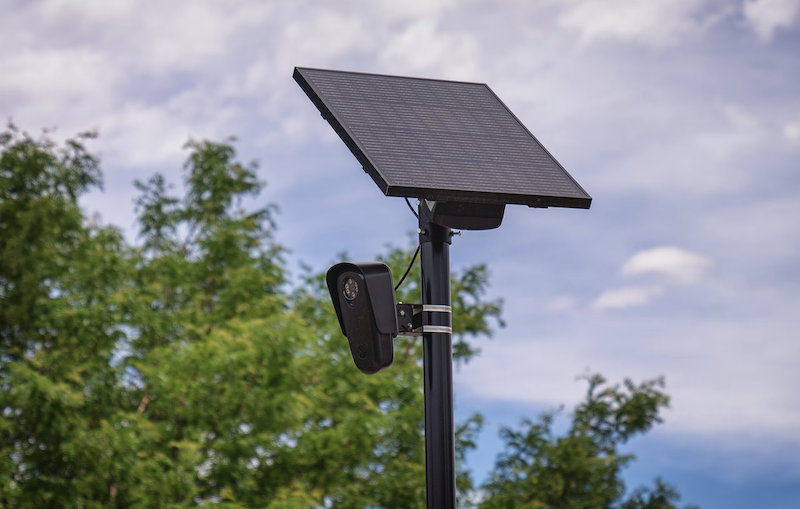
Flock cameras are automated license plate readers placed along roads and near businesses. They photograph passing vehicles and use artificial intelligence to identify license plates and other details about a vehicle. Police can search the system for cars linked to crimes, missing people or stolen vehicles. Some police departments also allow other agencies to search their camera data.
Abbott’s office confirmed that the governor ordered the funding pause Thursday night. Spokesperson Andrew Mahaleris said Texas agencies are being told that state funds cannot be used for Flock cameras. Abbott later described the growing pushback against the cameras as a “crackdown” taking place across Texas.
The decision came after The Texas Tribune found that at least $30 million in state funding had helped expand the Flock network in Texas. Much of that money came through the Motor Vehicle Crime Prevention Authority. The authority used money collected from a fee added to Texas auto insurance policies to help law enforcement fight vehicle theft. Since 2023, those grants have helped state and local agencies install at least 3,200 Flock cameras. Nearly 1,200 of those cameras are connected to a $15.9 million agreement involving the Texas Department of Public Safety.
The size of the wider network is difficult to measure. Flock does not publish a complete list of its cameras, but a crowdsourced tracking project has identified about 13,000 cameras in Texas. DPS also has data-sharing agreements with more than 200 local and county law enforcement agencies, according to records obtained by The Texas Tribune. That allows investigators to search vehicle information across a much larger area than one city or county.
Supporters say the cameras can help police find suspects faster and can be especially useful when officers have only a vehicle description or license plate number. Flock Safety says its system has helped law enforcement solve serious crimes and recover stolen vehicles. The company also says its network helped locate more than 10,000 missing people last year. In Houston, Police Chief Noe Diaz said vandalism of one Flock camera recently made it harder for investigators to identify a suspect in an attempted child abduction.
Flock Safety said after Abbott’s decision that it supports privacy rules that still allow police to use the technology for public safety. The company has added auditing tools designed to detect improper searches and says officers are not allowed to use the system for personal reasons. Flock argues that the cameras do not use facial recognition and are focused on vehicles rather than identifying people by their faces.
Critics say the problem is not only what individual cameras collect, but how easily the information can be shared. A vehicle can be recorded as it moves through different communities, creating a record of where someone travels. Privacy advocates say that could reveal visits to a home, workplace or place of worship even when a person is not suspected of a crime. They also argue that most drivers are recorded without being asked for permission.
Recent cases involving police officers have increased those concerns. Abbott pointed to a Lufkin officer who was indicted on 100 counts related to alleged misuse of government information. Authorities accused the officer of using Flock data to monitor people for more than a year. Other Texas officers have faced criminal charges or internal investigations over claims that they used license plate reader information to monitor former partners or coworkers. Those cases remain subject to the normal court and disciplinary process.
Several Texas communities are now reconsidering the technology. Pflugerville voted unanimously on Aug. 25 to disable 28 Flock cameras and end its agreement with the company. City officials said records showed that hundreds of outside organizations had searched data connected to Pflugerville’s system, raising questions about how widely the information was available. Mayor Doug Weiss said public safety and public trust have to work together.
Other communities have taken different approaches. League City is allowing voters to decide whether the cameras should continue through a ballot measure. Some police departments still strongly support the systems and say removing them would take away a useful investigative tool. The growing disagreement shows that concern about Flock is not limited to one political party. Privacy advocates from both conservative and liberal groups have questioned how much government surveillance should be allowed without a warrant.
Abbott’s action stops additional state funding for now, but it does not settle the larger debate. Texas lawmakers may eventually consider statewide rules covering how long vehicle data can be stored, who can search it and what punishment should apply when the system is misused. For now, Flock cameras remain active in many Texas communities while the state decides whether the benefits to law enforcement outweigh the risks to privacy.