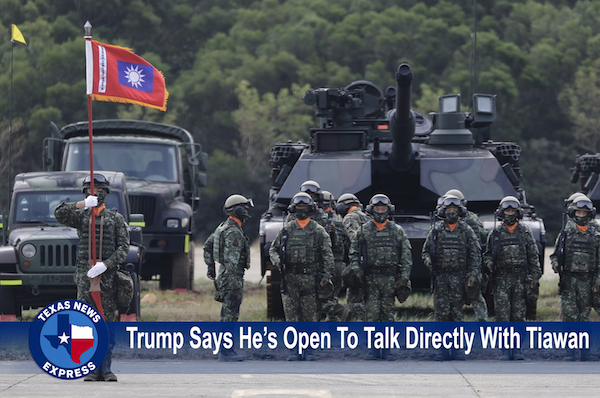
President Donald Trump said he may speak directly with Taiwan’s President Lai Ching-te about a possible U.S. arms sale, a move that would mark a sharp break from decades of diplomatic practice and could further strain relations between Washington and Beijing.
The comments come as the Trump administration weighs a proposed arms package for Taiwan reportedly worth about $14 billion. Reuters reported that China has objected to the potential sale and that Beijing’s opposition has complicated a possible visit to China by Pentagon Under Secretary of Defense for Policy Elbridge Colby.
Taiwan’s government responded Thursday by saying Lai would be willing to speak with Trump. Taiwan’s foreign ministry said Lai remains committed to maintaining peace and stability in the Taiwan Strait and would be happy to discuss the issue with the U.S. president.
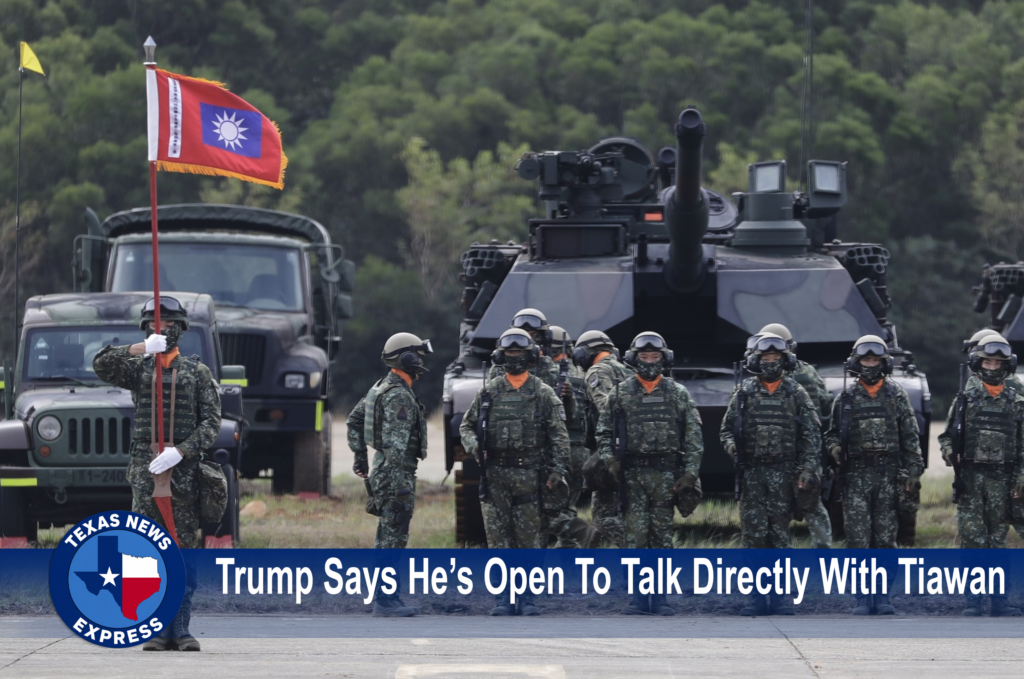
A direct conversation between sitting U.S. and Taiwanese presidents would be diplomatically significant. The United States has not had formal diplomatic relations with Taiwan since 1979, when Washington recognized the People’s Republic of China as the government of China. Since then, U.S.-Taiwan relations have been conducted through unofficial channels, while Washington has continued to provide Taiwan with defensive support under the Taiwan Relations Act.
China strongly opposes official contact between the United States and Taiwan, which Beijing claims as part of its territory. China’s Foreign Ministry said Thursday that it “firmly opposes” U.S.-Taiwan official exchanges and U.S. arms sales to Taiwan, warning Washington not to send what it called “wrong signals” to Taiwan independence forces.
Taiwan rejects Beijing’s sovereignty claims and says its future should be decided by its own people. Lai has repeatedly argued that Taiwan’s purchases of U.S. weapons are meant to deter conflict, not provoke it. In recent remarks marking the midpoint of his term, Lai said he would tell Trump, if given the chance, that Taiwan hopes to continue buying arms from the United States to preserve peace across the Taiwan Strait.
The issue has become more sensitive following Trump’s recent meeting with Chinese President Xi Jinping. Reports from Reuters and other outlets say Taiwan was a major subject of the Trump-Xi discussions, with Beijing pressing Washington to handle the matter cautiously.
The United States has long followed a policy of “strategic ambiguity” toward Taiwan: it recognizes Beijing diplomatically but maintains unofficial relations with Taipei and provides Taiwan with defensive weapons. The Taiwan Relations Act states that the United States will make available defense articles and services needed to help Taiwan maintain a sufficient self-defense capability.
Supporters of continued arms sales say Taiwan faces growing military pressure from China and needs stronger defenses to deter an attack or blockade. Critics of a direct Trump-Lai call warn that it could escalate tensions with Beijing at a time when Washington is also trying to manage trade, military and technology disputes with China.
Trump has previously challenged Taiwan-related diplomatic norms. As president-elect in 2016, he spoke with then-Taiwan President Tsai Ing-wen, a call that drew protests from Beijing because it was the first known direct conversation between a U.S. president or president-elect and a Taiwanese leader in decades.
For now, no direct call has been publicly confirmed. But the possibility alone has placed Taiwan back at the center of U.S.-China tensions, with Washington weighing its legal commitments to Taiwan’s defense, Taipei seeking reassurance, and Beijing warning against any step it views as official recognition of the island’s government.