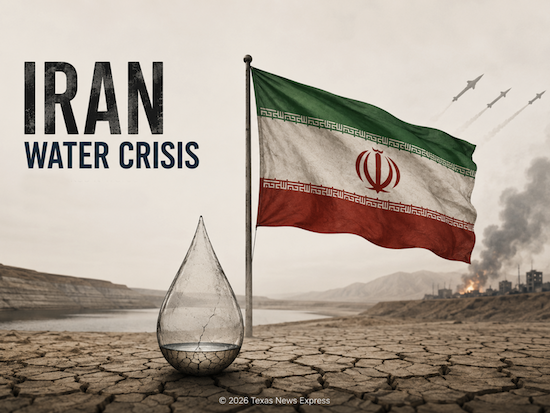
Iran is not simply facing a dry year. It is facing the result of decades of water mismanagement, overuse, political priorities and environmental stress that have pushed one of the Middle East’s largest countries toward what experts increasingly call “water bankruptcy.” Now, the war between the United States and Iran is making the crisis harder to manage, by damaging infrastructure, disrupting energy systems, straining public finances and pulling government attention away from long-term water reform.
The numbers are stark. Iran has endured years of drought, and World Weather Attribution reported that the country was facing its fifth consecutive year of drought in 2025. The group said the current emergency is part of a longer-term water crisis caused by repeated droughts, rising evaporation, water-intensive agriculture and unsustainable groundwater extraction. Agriculture alone consumes more than 90% of Iran’s water, meaning the country’s food and farming policies are directly tied to its water future.
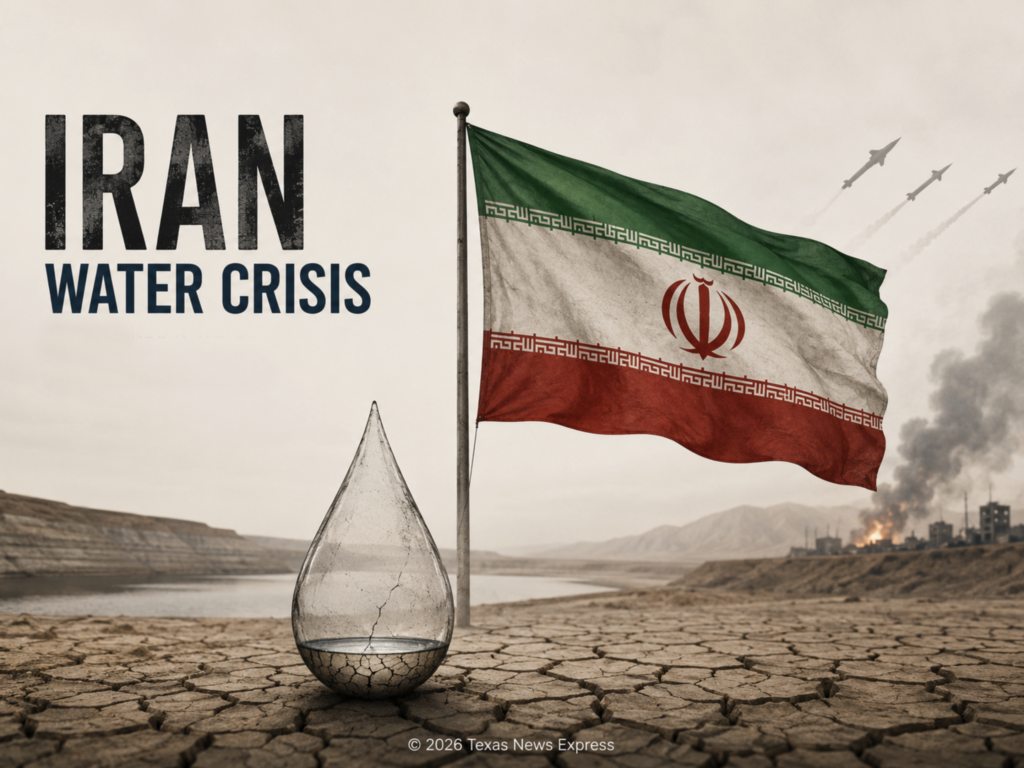
Iran’s war with the United States is costing it far more than dignity and money to rebuild infrastructure, the country has been in a deep drought for years and is hobbled by decades of water mismanagement. Soon, Iran will have no choice but to give in to U.S. demands or face destruction from its own population fleeing just to survive.
The most dangerous part of the crisis may be underground. Iran has pumped groundwater faster than aquifers can naturally refill, especially in central and eastern parts of the country. The U.N. Food and Agriculture Organization estimates Iran’s groundwater depletion at about 3.8 cubic kilometers per year and says agriculture accounts for about 92% of total water withdrawals. That means Iran is not just using water from rivers and reservoirs; it is drawing down its hidden emergency reserve.
This pattern did not happen by accident. For decades, Iranian policy emphasized agricultural self-sufficiency, dam construction, water transfers and politically favored development projects, even in regions where water supplies were already limited. Yale Environment 360 reported that experts blame years of poorly planned dams and overpumping for destroying or weakening older, more sustainable water systems, including traditional underground qanats that once helped communities manage scarce water more carefully.
The consequences are visible across the country. Lakes and wetlands have shrunk, rivers have run dry, wells have failed and land subsidence has become a growing danger. Scientific research published in 2024 found that intensive groundwater pumping is causing widespread land subsidence across Iran, threatening both water resources and infrastructure. Once land sinks because aquifers collapse, that storage capacity often cannot be recovered.
The crisis has also become political. Water shortages triggered protests in Khuzestan in 2021, and farmers in Isfahan have repeatedly protested the diversion of water from the Zayandeh Rud river, which left farms dry and livelihoods threatened. Reuters reported that Iranian farmers accused the government of mismanagement, while water-related unrest spread into multiple provinces.
Tehran shows how severe the problem has become. In late 2025, Reuters reported that taps were running dry in parts of the capital as the national crisis deepened. Iranian President Masoud Pezeshkian warned that if rationing failed and rain did not arrive, residents might have to evacuate Tehran. That kind of warning from a sitting president is extraordinary, especially in a capital region that is home to millions of people and much of the country’s political and economic power.
The war with the United States has added a new layer of danger. Water systems depend on electricity, fuel, spare parts, chemical treatment supplies, pumps, pipelines and trained workers. War disrupts all of those. The World Resources Institute warned that the Iran war could worsen the Middle East’s water problems by damaging infrastructure, diverting money and attention away from water management, and creating new risks around energy supplies.
The risk is not theoretical. Iranian officials have accused the United States of striking a desalination facility on Qeshm Island, reportedly affecting water supply to roughly 30 villages, though the United States and Israel have denied carrying out the attack. The Arab Center Washington DC reported that the facility remained out of service a month later. Even when responsibility is disputed, the larger point remains: in a region where many communities rely on fragile water infrastructure, damage to a single plant can quickly become a civilian emergency.
The conflict around the Strait of Hormuz is also worsening the water problem indirectly. Reuters reported that Iran’s latest proposal called for an end to the war, lifting sanctions, ending the naval blockade and addressing navigation through the Strait of Hormuz. At the same time, recent reporting says the ceasefire is under serious strain, with shipping disrupted and energy prices rising. For Iran, higher conflict pressure means less money and fewer imports for water infrastructure, desalination equipment, pumps, treatment systems and agricultural modernization.
War also reinforces the same misplaced priorities that helped create the crisis. In peacetime, Iran needed deep reforms: less water-intensive farming, better irrigation, stricter groundwater controls, repair of leaky urban systems, protection of wetlands and more realistic planning for cities built beyond their water supply. In wartime, governments usually spend first on weapons, fuel, security, emergency repairs and political survival. That makes it harder to make painful but necessary water decisions.
There is no single cause of Iran’s water crisis. Drought and climate change matter. Sanctions and economic isolation matter. But Iran’s own choices matter too. For years, the country treated water as if engineering, drilling and political will could overcome geography. That assumption is now failing. The current war is not the original cause of Iran’s water crisis, but it is accelerating the damage and making recovery more difficult.
The result is a country fighting two battles at once. One is visible in the Gulf, in the air and in diplomatic negotiations. The other is quieter but may be more lasting: collapsing aquifers, drying farms, stressed cities and a population increasingly aware that water can no longer be taken for granted. If Iran’s leaders do not change how the country uses and protects water, even an end to the war may not stop the deeper crisis already unfolding beneath its feet.