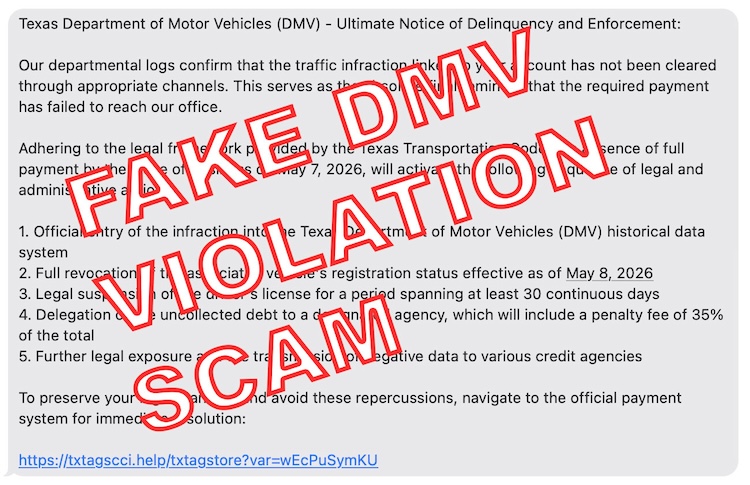
A new wave of scam text messages is targeting Texas drivers by pretending to come from the Texas Department of Motor Vehicles, a toll agency, or a similarly named government office. The message often claims the recipient has an unpaid traffic violation, toll balance, or court-related delinquency, then threatens license suspension, registration revocation, collection fees, or credit reporting unless the person pays immediately. The example shown above follows that pattern closely: it uses official-sounding language, a deadline, threats of enforcement, and a payment link that is not a Texas government website.
Texas News Express spoke with representatives connected to both TxDMV and the Harris County Toll Road Authority’s EZ TAG operation. Both said consumers should be extremely cautious with text messages that include links asking for payment, account confirmation, or personal information. According to the agencies, they will not send a text message with a link demanding that a person pay something or confirm account details. Instead, official notices are typically sent by letter through the U.S. Postal Service, addressed to the person by name and mailing address, and include account-specific information that allows the recipient to verify the matter through official channels.
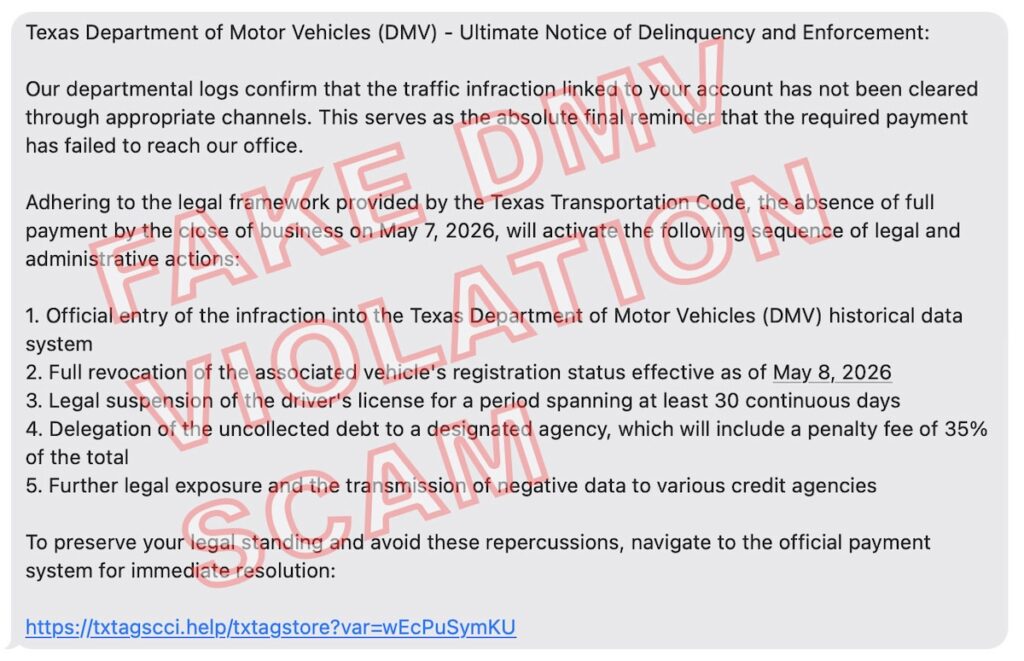
One major red flag is the link itself. Real Texas government websites commonly use official domains such as texas.gov or agency domains ending in .gov. The link in the screenshot uses a suspicious non-government domain: “txtagscci.help.” Scammers often create websites that look close enough to official names to fool people, especially on a phone screen where the full address may not be obvious.
Consumers should also be suspicious of threats that demand same-day payment. Real citations, toll bills, and court notices usually provide identifying details such as a citation number, issuing agency, court name, vehicle information, mailing address, and a formal dispute or appeal process. Scam texts often use broad language like “traffic infraction linked to your account” without clearly identifying the ticket, the court, the toll account, or the vehicle.
Anyone who receives this type of message should avoid clicking the link, scanning any QR code, calling phone numbers listed in the message, or entering payment information. Instead, look up the proper agency independently. For a traffic citation, contact the court listed on the actual ticket or the local jurisdiction where the alleged violation occurred. For tolls, go directly to the official toll authority website by typing the address yourself. For vehicle registration issues, go directly to TxDMV or Texas.gov.
If a person already clicked the link but did not enter information, they should close the page and avoid further interaction. If they entered credit card, debit card, bank, driver’s license, or Social Security information, they should contact their financial institution immediately, dispute unauthorized charges, consider replacing the affected card, monitor accounts, and place fraud alerts or credit freezes if sensitive identity information was exposed.
These scams work because they create urgency and fear. The safest response is to slow down, verify through official channels, and never let a text message rush you into payment. If a message claims to be from TxDMV, EZ TAG, a toll agency, or a court, do not use the link in the message. Go directly to the agency’s official website, call a verified phone number, or wait for a mailed notice that includes your name, address, and account-specific information.