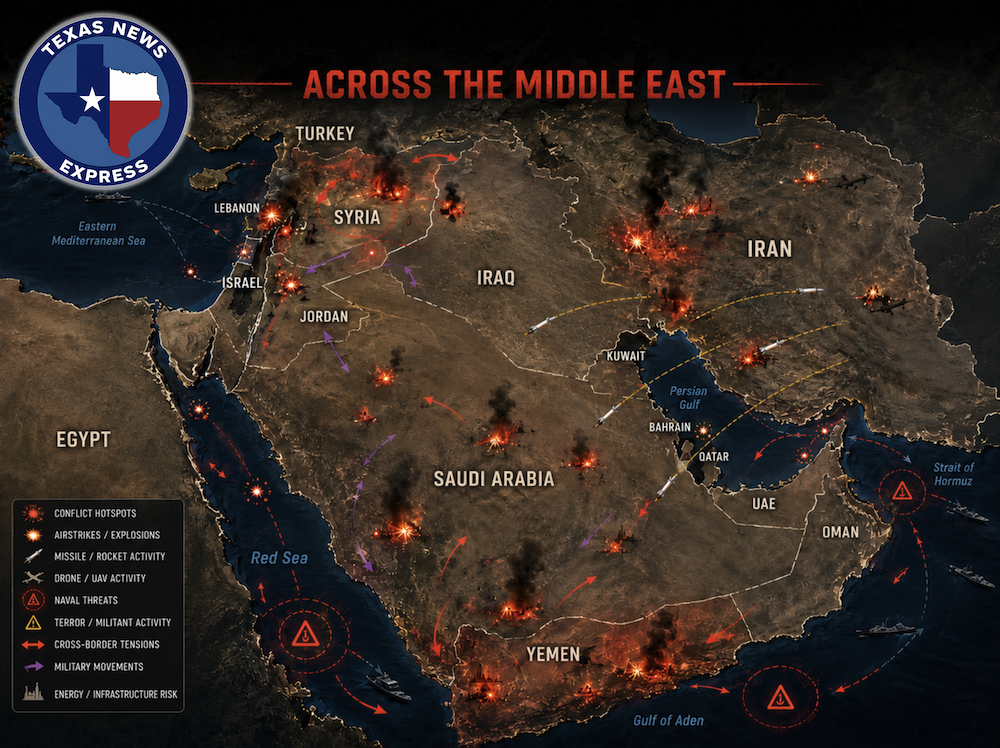
Iran, Lebanon, the Gulf and the Red Sea all moved deeper into crisis this week, with maritime chokepoints again becoming the region’s main pressure points. The Strait of Hormuz remains the center of gravity, but the pressure is spreading outward to Beirut, the UAE, the Suez Canal and the Red Sea shipping lanes.
Iranian official Mohsen Rezaei said Iran would not accept a U.S. plan to reopen the Strait of Hormuz, calling the proposal “unrealistic” and insisting that Tehran would need more than symbolic concessions. Rezaei, a former commander of Iran’s Revolutionary Guard, said Iran wants “tangible benefits” and compensation for wartime damage, framing the issue as one of war reparations rather than only maritime access.
The statement complicates U.S. efforts to turn a temporary pause in fighting into a broader regional deal. Reuters reported that the United States and Iran are discussing a short-term arrangement that would end active hostilities, address the Hormuz crisis and open a negotiating window for a wider agreement, but major issues remain unresolved.
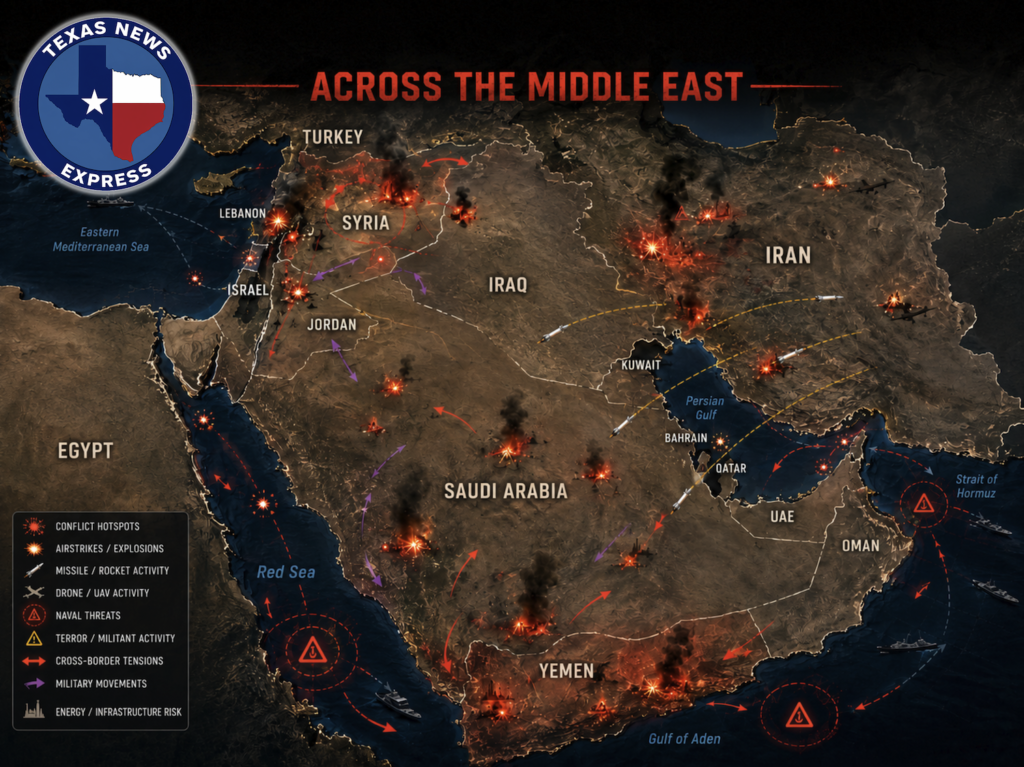
The Strait of Hormuz remains the most economically sensitive flashpoint. The International Energy Agency describes Hormuz as a narrow passage connecting the Persian Gulf to the Gulf of Oman and Arabian Sea, with two-mile-wide navigable channels for inbound and outbound shipping. That geography gives whoever can threaten the route enormous leverage over oil, gas and shipping markets.
The United States has tried to restore freedom of movement through the strait while maintaining pressure on Iran. U.S. forces recently moved destroyers through the Strait of Hormuz after what U.S. officials described as Iranian attacks involving missiles, drones and small boats. CBS News reported that two U.S. Navy destroyers transited the strait after the confrontation, giving the U.S. more presence inside and around the contested waterway.
U.S. Central Command also reported that American helicopters destroyed six Iranian small boats that were allegedly threatening commercial shipping and U.S. military vessels. Iran rejected the U.S. account, while American officials said the operation was part of a broader effort to clear threats around Hormuz.
The UAE has become increasingly central to the Hormuz crisis. Reuters reported that the UAE accused Iran of attacking an empty ADNOC tanker near Fujairah with drones, while the UAE later said its defense partnerships are a sovereign matter after Iran objected to Emirati cooperation with the United States.
The UAE has also signaled that it may be willing to join a U.S.-led or international effort to secure shipping through Hormuz. Reuters reported in March that a senior Emirati official said the UAE could join such an effort after Iran effectively shut the waterway to much of normal shipping.
That posture marks a sharp contrast with Saudi Arabia’s more cautious approach. The Guardian reported that the Trump administration paused or shelved “Project Freedom,” a proposed U.S. operation to escort tankers through Hormuz, after Saudi Arabia refused access to air bases and airspace because of concerns about escalation with Iran.
The crisis is also reviving long-discussed plans to reduce Gulf dependence on Hormuz. Reports have pointed to renewed Gulf interest in pipelines that could move oil away from the Persian Gulf and toward the Red Sea or Mediterranean routes. Saudi Arabia already has its East-West pipeline from eastern oil fields to the Red Sea port of Yanbu, but existing bypass capacity does not fully replace the volume normally moved by sea through Hormuz.
A proposed larger bypass network, including reported Gulf discussions about new routes beyond Hormuz, would be costly, politically complicated and environmentally controversial. Environmental concerns would likely focus on pipeline construction corridors, coastal terminals, spill risks, desert and marine habitats, and the additional infrastructure needed to move crude across long distances.
The Red Sea remains another pressure point. Houthi attacks on commercial shipping have already damaged global maritime routes and pushed many vessels away from the Suez Canal. Naval News reported in 2025 that the Houthis sank two merchant vessels in one week, the Magic Seas and Eternity C, using missiles, unmanned surface vessels and RPGs.
Egypt is paying a heavy financial price for that disruption. Egyptian President Abdel Fattah el-Sisi said Egypt has lost about $10 billion in Suez Canal revenue because attacks around Bab el-Mandeb reduced traffic heading toward the canal.
Despite that dependence on Suez revenue, Egypt has not emerged as the dominant military actor protecting Red Sea shipping. That leaves the burden mostly on U.S., European and allied naval coalitions, while Egypt absorbs the economic damage from rerouted traffic without appearing able to independently stop Houthi attacks far to the south.
In Lebanon, Israel confirmed it carried out a strike in Beirut’s southern suburbs targeting a commander in Hezbollah’s elite Radwan force. Reuters reported that the strike hit Dahiyeh and was the first such attack near the Lebanese capital since an April ceasefire.
The Beirut strike threatens an already fragile ceasefire with Hezbollah. Israeli Prime Minister Benjamin Netanyahu said after the strike that militants would have “no immunity,” while Lebanon’s government warned against rushing into high-level talks before stabilizing the ceasefire and security situation.
Israel confirmed the first domestic case of hantavirus involving a less-deadly European variant. Additionally the World Health Organization and international health officials are tracking a hantavirus outbreak connected to the MV Hondius cruise ship, with confirmed deaths and suspected or confirmed cases involving the Andes strain. Health officials have stressed that the broader public risk remains low, though the Andes strain is unusual because limited human-to-human transmission can occur through close contact.
Taken together, the day’s developments show a region where the battlefield is no longer limited to one front. Iran is using Hormuz as leverage, the UAE is edging closer to direct military alignment with the United States, Israel is continuing strikes beyond Gaza, Lebanon’s ceasefire is weakening, Egypt is losing canal revenue, and the Red Sea remains vulnerable to Houthi attacks.
The strategic pattern is clear: Middle Eastern conflicts are increasingly being fought through shipping lanes, pipelines, ports and energy infrastructure. Whether diplomacy can reopen Hormuz and calm the Red Sea will determine not only the next phase of the regional conflict, but also the cost of fuel, food and shipping far beyond the Middle East.