Residents are raising concerns about noise, water use and the possible effect of massive data centers on electric bills.
AUSTIN, Texas – Gov. Greg Abbott is calling for stronger rules on large data centers as more Texas residents question how the fast-growing industry will affect their communities. Abbott says data centers should pay for the electricity systems they need, protect local water supplies and reduce noise near homes.
The change comes after Abbott spent years welcoming technology companies to Texas. In November 2025, Abbott joined Google in announcing a planned $40 billion investment in Texas data centers and energy projects. At the time, he called Texas the center of artificial-intelligence development. Supporters say data centers can bring construction work, investment, tax revenue and technology growth.
However, data center projects have become a major political issue in both Republican and Democratic communities. Residents have complained about noise from cooling systems, fans and backup generators. Others worry about bright lights, traffic, lost farmland and the industrial look of large buildings near rural neighborhoods. A University of Texas professor told the Houston Chronicle that much of the resistance is tied to concerns about water, electricity rates and noise.
Water use is one of the largest concerns. Some data centers use large amounts of water to keep computer equipment cool. Residents in farming and ranching areas worry that heavy use could lower wells or leave less water available during droughts. Abbott wants future state laws to require water-saving systems, including closed-loop cooling that reuses water instead of constantly drawing new supplies.
Electricity costs are another major issue. Large data centers can use as much power as a small city. New facilities may require power plants, substations and long transmission lines. Residents fear that electric companies could recover some of those costs by raising rates for homes and small businesses. It has not been proven that data centers alone are already causing statewide Texas electric-rate increases, but state leaders agree that their growth could create major new costs unless rules clearly decide who must pay.
On June 10, Abbott ordered the Public Utility Commission of Texas and the Electric Reliability Council of Texas to protect regular customers from those expenses. He directed regulators to require data centers to fully pay for electric infrastructure built mainly to serve them. He also said data centers should add new power to the grid instead of only increasing demand.
On July 24, Abbott said regulators had begun putting those orders into action. The state said data centers would be required to pay for transmission projects serving them and contribute toward lowering residential bills. Regulators are also developing stronger connection standards and rules requiring large facilities to reduce their electricity use quickly when ERCOT orders them to do so.
Abbott also plans to ask lawmakers in 2027 to require data centers to report their yearly water and electricity use. He wants lawmakers to consider ending sales-tax exemptions and other incentives that data centers have received. The current exemption allows qualifying data centers to avoid taxes on equipment, cooling systems and electricity for as long as 20 years. State officials estimate the program could cost Texas $3.3 billion in lost revenue during the 2028–2029 budget period.
The tougher policy has already affected at least one project. Kansas-based Diode Ventures has withdrawn its plan to build a large data center near Cedar Creek Lake in Henderson County. The company said it decided not to continue after reviewing Abbott’s standards, local concerns and available infrastructure.
The proposed center would have been surrounded by hundreds of homes and was expected to take about 12 years to complete. The Fort Worth Star-Telegram reported that it could have used 5 million gallons of lake water each day by its fifth year. Thousands of residents signed a petition opposing the project because they were worried about the lake, nearby neighborhoods and long-term water supplies.
Abbott praised Diode for withdrawing, saying companies must protect natural resources, the power grid and residents’ quality of life. Diode said it remains interested in responsible development at sites that have enough infrastructure and community support. Local officials warned that another company could still try to develop the same property.
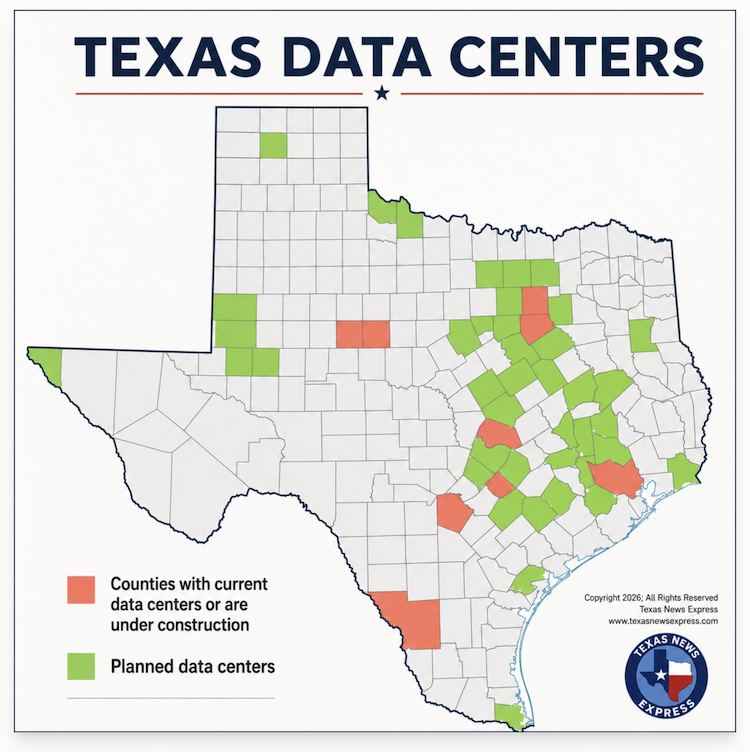
The debate is likely to continue. Texas has at least 241 data center projects planned, according to data reported by the Houston Chronicle, and ERCOT expects major growth in electricity demand from data centers and other large users. Abbott says Texas can remain a major technology center without making families pay the cost. Critics from both parties say stronger laws are needed now, including more local control over where data centers can be built.