Clothing designed to confuse facial-recognition systems is moving from the world of privacy activists and technology researchers into a broader fashion conversation, as designers test whether concerns about surveillance can become part of mainstream style.
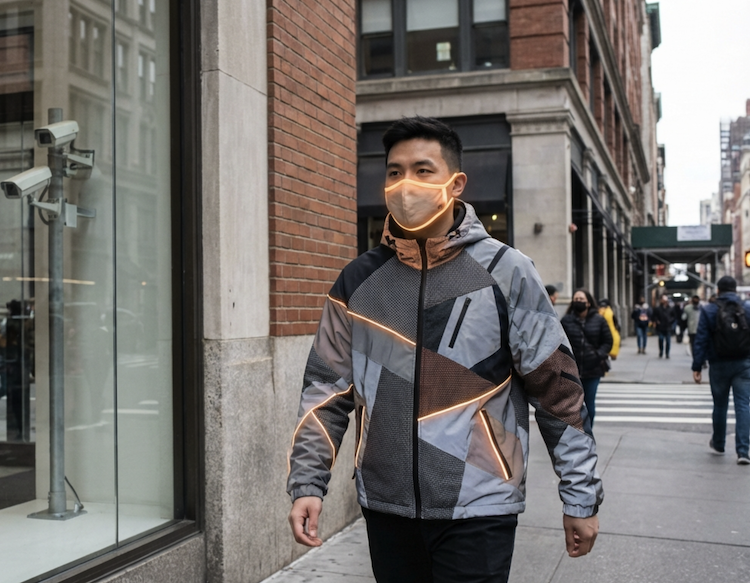
The garments, often described as “adversarial clothing,” use patterns, shapes, repeated images, reflective materials, asymmetrical designs or embedded lights intended to interfere with automated camera systems. Some designs are meant to make software detect false faces, misread a body, or reduce the chance that a person’s real face can be matched to an identity.
The idea is not new. Artists, researchers and privacy advocates have experimented for years with makeup, masks, glasses, reflective fabrics and patterned clothing to resist computer vision systems. What is changing is the commercial packaging. Brands such as Vollebak, Urban Privacy and Cap_able are now presenting anti-surveillance clothing not only as a privacy tool, but as a fashion product.
The trend comes as facial recognition becomes more visible in policing, retail security, border control, private buildings and consumer devices. In the United Kingdom, police use several forms of facial-recognition technology, including live facial recognition, retrospective facial recognition and officer-initiated searches. The British government says police use must be necessary, proportionate and fair, and that a human officer makes the decision after a possible live facial-recognition alert.
Supporters of the technology say facial recognition can help locate wanted suspects, identify missing people and assist police investigations. The Metropolitan Police has published policy documents, legal guidance, impact assessments and deployment records for its use of facial recognition. In April, a British court rejected a legal challenge to the London police’s live facial-recognition policy, ruling that the policy contained sufficient safeguards and did not violate the claimants’ rights.
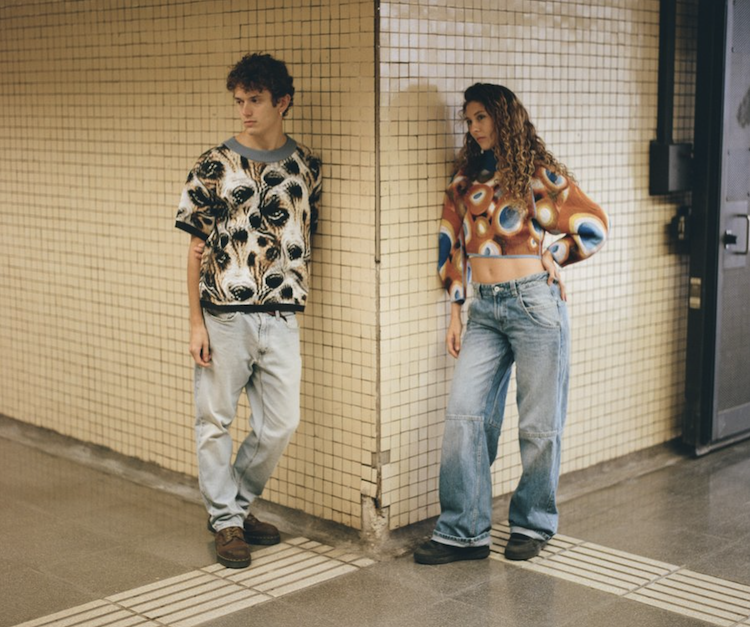
Photographer Lucas Troadec captures two models using colors in thier clothing to confuse AI powered surveillance cameras.
Critics argue that facial recognition expands government and private surveillance in public spaces, often without meaningful consent from the people being scanned. Privacy groups also point to concerns about accuracy, oversight and the potential chilling effect on public movement, protests and political activity. A federal study by the U.S. National Institute of Standards and Technology previously found that many facial-recognition algorithms had higher false-positive rates for some demographic groups, including Asian and African American faces, compared with Caucasian faces, depending on the algorithm and testing conditions.
The effectiveness of adversarial clothing remains uncertain. Some garments may confuse certain systems under certain lighting, distance or camera conditions, but there is no verified evidence that a shirt, coat or pattern can reliably defeat all modern facial-recognition systems. Developers of the clothing acknowledge that no design can guarantee invisibility from surveillance.
That uncertainty has not stopped interest from growing. Designers say the point is partly technical and partly symbolic. Wearing anti-surveillance clothing can signal concern about privacy even if the garment does not always block identification. In that sense, the clothing functions like both fashion and protest.
The commercial future of the trend is also uncertain. It is likely, though not yet proven by public sales data, that anti-surveillance clothing could attract more buyers as AI tools become more common and public concern about biometric tracking grows. It is also likely that larger fashion brands will watch the market closely, especially if celebrities, musicians or influencers begin wearing the clothing in public.
There are also legal and political questions. If the clothing proves effective, governments or businesses may try to restrict it in certain places such as airports, government buildings, casinos, stadiums or secure facilities. If it remains mostly symbolic, it may be treated more like political fashion than a security threat.
For now, adversarial clothing sits between invention, activism and consumer style. Its rise shows that public anxiety about surveillance is no longer limited to policy debates or courtrooms. It is beginning to appear on the body, in the street and on the rack.