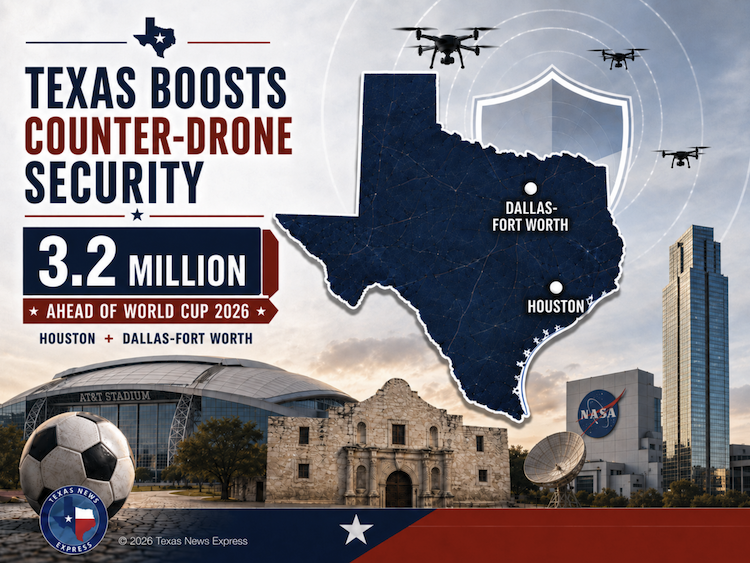
Texas is investing $3.2 million in counter-drone technology as the state prepares to host 2026 FIFA World Cup matches in Houston and the Dallas-Fort Worth area, part of a broader security effort for one of the largest international sporting events ever staged in North America.
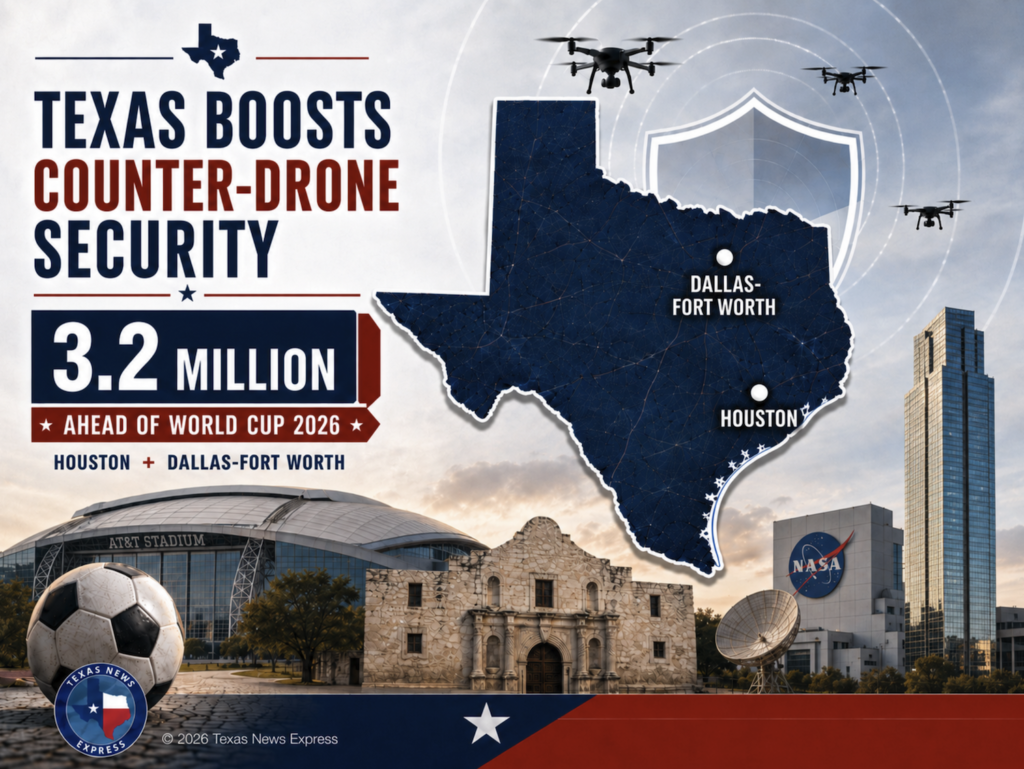
The funding, provided through the Federal Emergency Management Agency, will support the Texas Department of Public Safety as it deploys drone detection and mitigation systems before and during the tournament. State officials described the equipment as a proactive public safety measure designed to help detect, track and respond to unauthorized drones near stadiums, fan events and other high-security areas.
The 2026 World Cup will be hosted across the United States, Mexico and Canada, with Texas playing a major role. FIFA says Houston will host seven matches, including two knockout-round games. Dallas-Fort Worth will host nine matches, according to the Dallas World Cup 2026 organizing committee, making North Texas one of the busiest U.S. host regions during the tournament.
The new counter-drone equipment is expected to help law enforcement monitor unauthorized unmanned aircraft systems in real time. Reporting from Chron said the technology can include radio-frequency monitoring and systems that can be used in both stationary and mobile settings. DPS aircraft operations personnel are also expected to receive specialized FBI training focused on lawful drone mitigation during high-profile events.
The concern is not theoretical. Drones have become cheaper, easier to fly and more common around large public events. Even a small drone can create a safety problem if it enters restricted airspace, interferes with aircraft, flies over a packed stadium or carries a hazardous payload. For a global event like the World Cup, where crowds, athletes, dignitaries and international media will gather in concentrated areas, officials are treating drone activity as both a safety issue and a security issue.
Houston is also seeking and receiving broader federal support for its World Cup preparations. The Houston Chronicle reported that Houston is receiving nearly $90 million in federal funding connected to the tournament, including money for security operations, transit support and counter-unmanned aircraft systems. A separate earlier report said Houston officials had applied for more than $64 million in federal public safety funding and about $15 million for unauthorized drone monitoring tied to World Cup operations.
Security planning is also ramping up in North Texas. Federal authorities have launched Operation Red Card, a pre-World Cup enforcement effort focused on crimes such as human trafficking, drug trafficking, violent crime and illegal gun possession in areas expected to be affected by the tournament, including Arlington and surrounding communities. The Dallas Morning News reported that more than 130 people had already been federally charged through the initiative.
The drone issue sits at the intersection of technology, public safety and federal law. Local and state police can detect and track drones in many situations, but taking control of or disabling a drone is legally more complicated. That is why training and coordination with federal agencies such as the FBI, the Department of Homeland Security and the FAA are important. Officials must balance public safety needs with aviation rules, privacy limits and federal restrictions on who can interfere with aircraft communications or control systems.
For fans, the practical message is simple: do not bring or fly drones near World Cup venues unless specifically authorized. Temporary flight restrictions and local security zones are expected around stadiums and related event sites. Violating those rules could lead to drone seizure, fines or criminal investigation, especially during a high-security international event.
The $3.2 million investment will not eliminate every risk, but it gives Texas another layer of protection as Houston and Dallas-Fort Worth prepare for enormous crowds. The World Cup is expected to bring international attention, tourism and economic activity to the state. It will also bring a level of security planning more commonly associated with national political conventions, Super Bowls and major international summits.
Texas officials are betting that counter-drone technology will become a necessary part of that modern security playbook. In a tournament where the biggest threats may not all come through a gate or on a road, watching the sky has become part of protecting the crowd.